Using AI in Trading Strategies: Key Advantages
Explore Fahad's insights on AI in trading and why he advises against weekend trades.
10 min read
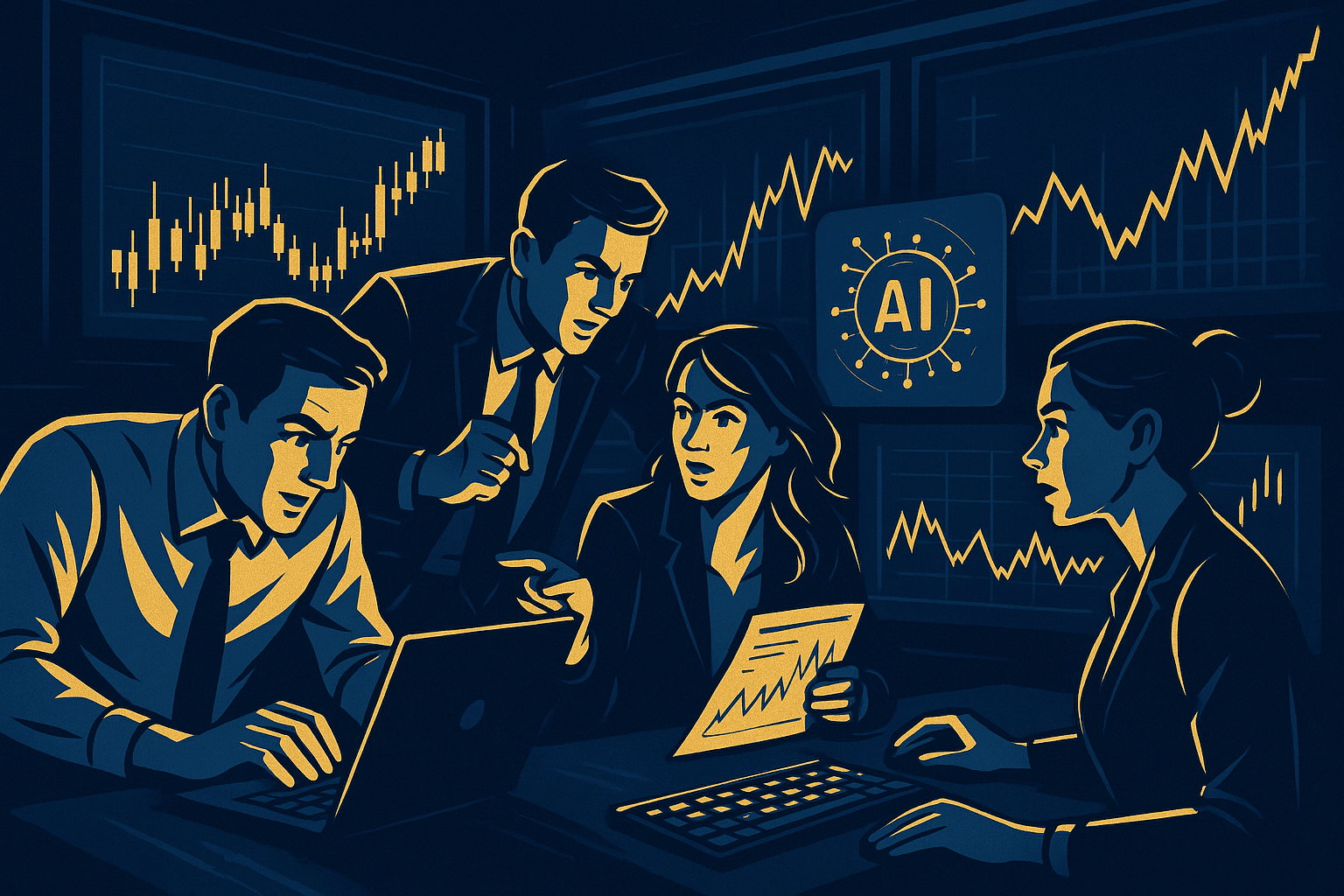
Fahad dropped something honest on the stream that most traders won't admit: not every day is a trading day, and not every problem needs a human solution. This session was about how to use AI in trading strategies, and our team dug into the parts that actually matter. Not the hype, not the buzzwords. The genuine shift in how we approach analysis, automation, and staying sharp when the market goes quiet. Fahad put it simply: 'I've been building so many tools that I never thought I could.' That one line? It tells you everything about where trading is heading. AI isn't replacing the trader. It's replacing the bad habits.
Key Takeaways
- AI's biggest edge in trading isn't speed. It's removing the emotional decisions that quietly destroy consistent performance.
- Low weekend volume doesn't just reduce opportunity. It actively creates misleading signals that trap undisciplined traders.
- Automation's real value is enforcing discipline. It removes the human deviation from a plan that was correct before emotions got involved.
- Community FOMO is one of the most reliable ways to enter a trade at the worst possible time. Build your own filter.
- AI optimizes strategy only when the trader already understands what they're automating. Never skip the manual validation step.
What are the advantages of using AI in trading?
AI in trading can streamline decision-making, reduce human error, and offer data-driven insights that make strategy work faster and more consistent. Whether you're analyzing price action across multiple timeframes or managing a portfolio of assets, AI handles the heavy lifting so the trader can focus on reading context, not crunching numbers.
So basically, here's the thing: most traders lose not because their setup is wrong, but because they second-guess themselves at the wrong moment. AI removes that moment. Simple as that.
Fahad's been building automation tools for months now. On the stream he was clear about what changed for him. 'I've been building so many tools that I never thought I could.' That's not hype. That's a trader who spent real hours figuring out how to make AI work inside an actual trading workflow, not just as a demo.
What does AI actually do for trading? A few concrete things:
- Pattern recognition at scale. AI can scan hundreds of assets simultaneously for setups that match your criteria. No fatigue, no missed signals.
- Emotional bias elimination. According to research on AI trading tools, AI-driven systems process data without the emotional weight that causes traders to hold losers too long or cut winners too early.
- Real-time alert generation. Instead of staring at five screens, you get pinged when conditions align. That's time back in your day.
- Portfolio-level analysis. AI can assess correlation between positions, flag overexposure, and flag when a hedge is no longer working.
Fahad's tools operate on a subscription model, which means they're being improved continuously based on real market feedback, not just backtested theory. (And this is where it gets interesting). The gap between a trader using these tools and one who isn't? It's widening every month.
Wait, actually, let me rephrase that. It's not that AI makes you a better trader overnight. It's that it stops you from being a worse one. If you can figure that part out, it becomes much easier to stay consistent across different market conditions.
Automating your investment portfolio with free AI tools is already a real option for retail traders. Fahad's approach shows that you don't need institutional resources to get started. You need discipline and the right setup.
Why is weekend trading not recommended?
Weekend trading is not ideal due to low volume and unpredictable market conditions, making it harder to execute informed trades. When liquidity thins out, spreads widen, moves become erratic, and the signals you trust during the week simply don't behave the same way. The market is a crowd. On weekends, most of the crowd goes home.
Fahad was direct about this on the stream: 'I'm still not a big fan of trading on weekends.' And honestly? That's one of the more underrated pieces of advice you'll hear from someone who trades actively.
Low volume doesn't just mean fewer trades. It means the trades that do happen carry outsized influence. One big player can move price in a direction that has nothing to do with actual market sentiment. You end up chasing noise. Not a good look.
'Honestly, Sunday is not the best day for major analysis.' That's not laziness. That's knowing when the edge exists and when it doesn't. Best traders? They protect their capital as much as they deploy it.
So what should you do instead? Prepare. Review the week. Let the AI tools run their scans. Come back Monday with a clear head and a cleaner setup. Simple.
'It's better to wait till Monday.' Just saying.
Volume variations across weekdays
| Day | Expected Volume |
|---|---|
| Monday | High, market reopens, institutional activity resumes |
| Tuesday | High, continuation of weekly momentum |
| Wednesday | Medium-High, mid-week positioning |
| Thursday | Medium, some position unwinding begins |
| Friday | Medium-Low, early close mentality, risk-off into weekend |
| Saturday | Very Low, crypto only, thin liquidity |
| Sunday | Lowest, minimal institutional presence, erratic moves |
For crypto traders specifically, understanding Bitcoin trading sessions helps clarify why even 24/7 markets have dead zones. Sunday is the deadest of them.
How does automation enhance trading strategies?
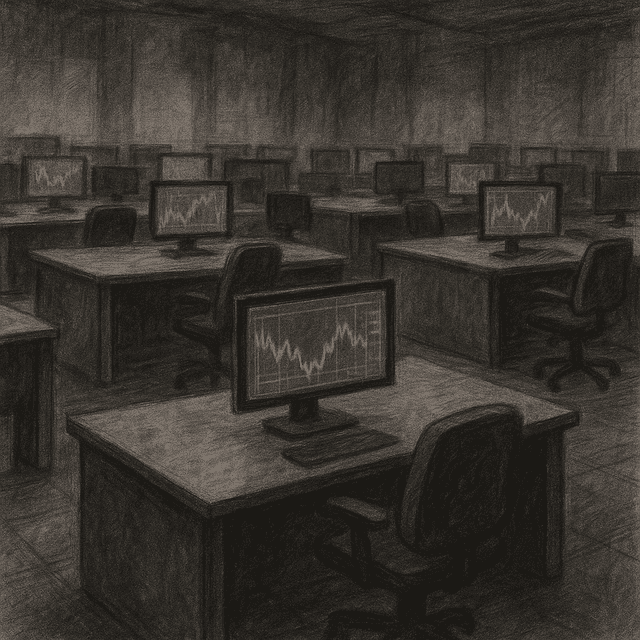
Automation in trading can handle repetitive tasks, provide real-time alerts, and execute trades efficiently. It frees up time for the kind of strategic analysis that actually requires a human brain. The point is, you shouldn't be manually checking twenty charts when a bot can do it in seconds. Why would you?
Fahad's been clear on this. Automation isn't about removing the trader from the equation. It's about removing the boring, error-prone parts so the trader can focus on what matters: reading context, managing risk, and making the high-conviction calls.
What does a well-built automation setup actually handle?
- Entry and exit triggers. Pre-set conditions that fire without hesitation when the market hits your level.
- Real-time alerts. Notifications the moment a setup forms, so you're not glued to screens all day.
- Position sizing calculations. Removes the mental math error that causes over-leveraged entries.
- Performance tracking. Logs every trade automatically so you can actually review what's working.
Research into fully automated trading systems shows that the biggest gains come not from the automation itself, but from the discipline it enforces. You can't deviate from the plan when the bot is executing it. That's the whole point.
Fahad's tools run on a subscription model, meaning the community gets access to updated versions as the tools evolve. Like, it becomes so clear once you see how much time you recover when the repetitive work is handled.
(And this is where it gets interesting). Automation also works during off-hours. While you sleep, the system is watching. That's not science fiction, that's just how the tools work now. ChatGPT and the broader AI evolution have made this accessible at a price point that wasn't possible three years ago.
You know what I mean? Barrier to entry for serious automation? Dropped dramatically. Traders who adapt early have a real edge.
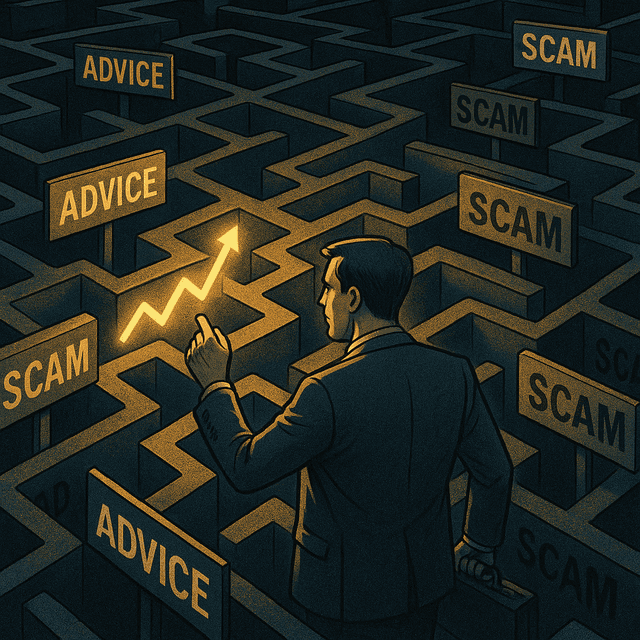
What are the challenges of relying on trading communities?
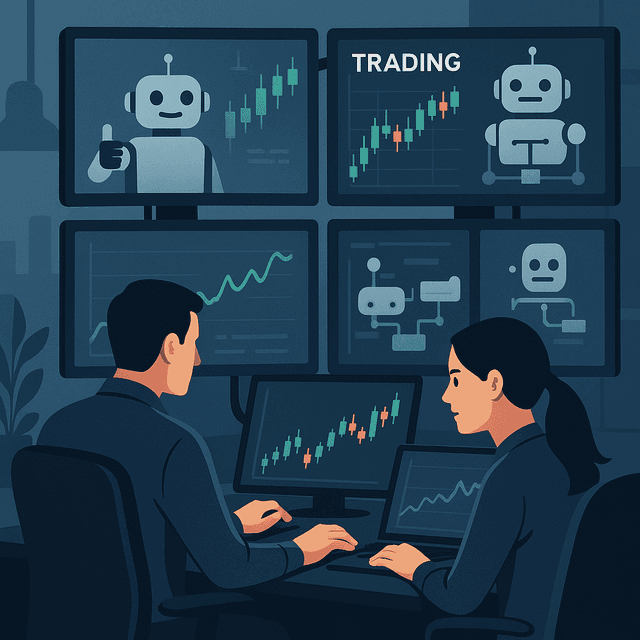
Trading communities provide support and shared insights, but members must develop the ability to discern credible advice from noise. The bad advice travels just as fast as the good kind, sometimes faster.
Fahad put it plainly on the stream: 'Being part of a community is a blessing but it can also be a curse.' That's not a throwaway line. That's a warning from someone who has watched traders blow up their accounts because they followed the wrong voice in a group chat.
Communities can be tricky. Loudest person? Usually not the most right. In fact, in trading communities, the loudest person is often selling something. Scams affecting traders are a real and growing problem, and the Hitpoint community has seen this play out firsthand.
What does bad community influence actually look like?
- Someone posts a trade call with no reasoning, just a ticker and a direction. Fifty people follow it blindly.
- A 'guru' posts cherry-picked wins with no mention of losses. New traders assume it's a consistent edge.
- FOMO spreads through a group chat faster than any analysis. Suddenly everyone is in a trade that nobody properly evaluated.
Right? That's the danger. It's not that communities are bad. It's that community momentum can override individual judgment at exactly the wrong moment.
'This is not something you have to do, but according to me...' Fahad's style has always been to present analysis as a perspective, not a command. That's how it should work. You take the information, run it through your own framework, and make your own call.
Choose who you listen to wisely. Not every active voice in a trading community has the track record to back their calls. Fahad's documented short plays on Bitcoin and Gold are an example of calls with reasoning attached: levels, context, and a thesis. That's what good community content looks like.
Personal strategy always beats borrowed conviction. Always.
How to optimize trading strategy with AI?
To fully get the most out of AI, traders should focus on specific strategies, stay updated with AI developments, and continually assess performance against their own objectives. Not against what someone else is posting in a group chat.
Knowing how to use AI in trading strategies isn't just about picking the right tool. It's about integrating it into a workflow that already has discipline built in. AI amplifies what's there. If the foundation is shaky, AI just makes the mistakes faster. That's the reality.
Practical framework based on what Fahad has been building and testing:
Step 1: Narrow your asset focus Fahad referenced BTC, ETH, XAU (Gold), and OIL as the core assets on the stream. Not twenty assets. Four. Why? AI tools perform better when they're trained and tested on specific instruments. Data is cleaner, patterns are more reliable, and your understanding of those assets deepens over time.
Step 2: Set clear performance benchmarks AI can track every trade. Use that. Set a benchmark: win rate, average R:R, maximum drawdown. Let the system tell you honestly whether the strategy is working. AI day trading tools are increasingly capable of generating these reports automatically.
Step 3: Stay updated on AI developments ChatGPT evolution? Changed what's possible for retail traders in under two years. The tools available today are not the tools available in 2022. Staying current isn't optional. It's part of the edge. Challenges and limitations of AI in trading are real, but they're shrinking as the technology matures.
Step 4: Don't automate what you don't understand This is the mistake most people make. They hand a strategy to a bot before they've validated it manually. Honestly?, I'm not sure why this keeps happening, but it does. Understand the logic first, then automate the execution.
Step 5: Review, adjust, repeat No AI setup is set-and-forget. Markets evolve. Dubai lifestyle might look like passive income, but the serious traders behind those results? They're reviewing performance constantly.
'Just go out, enjoy, and come back fresh on Monday.' That's real advice. Downtime isn't wasted time. It's when the AI keeps working while you recharge. That's the actual edge of automation. You stay sharp. System stays on.
This session covered a lot of ground. From automation tools to community traps to why Sunday is genuinely not the day for serious analysis. Here's what our team took away:
- AI removes emotional decisions, not the trader. Human still sets the strategy; the machine executes it without flinching.
- Low-volume periods are traps. Weekend markets reward patience, not activity. Edge isn't always in the trade.
- Automation frees up mental bandwidth. Real-time alerts, auto-logging, position sizing. These aren't luxuries, they're infrastructure.
- Community is a tool, not a strategy. Use it for ideas and accountability, not as a replacement for your own analysis.
- Narrow focus beats wide coverage. Four assets understood deeply will outperform twenty assets watched casually, every time.
Just stick to it. Build the tools, refine the process, and come back sharper each week. Join the Hitpoint community for live market coverage and real-time trade alerts, where analysis comes with reasoning attached, not just calls.
Watch the full stream: LIVE: Trading BTC, Gold, Silver | Orderflow & Footprint on YouTube
Disclaimer: This article is for educational purposes only and is not investment advice. The price levels, setups and trades described are a review of market events that have already occurred, shared to illustrate a method of analysis rather than to recommend any trade. Trading With Sidhant LLP is not a SEBI-registered Investment Adviser or Research Analyst, and nothing here constitutes a recommendation to buy or sell any security. All trading and investing carries risk of loss, and you should never risk capital you cannot afford to lose. Past performance is not indicative of future results. Please consult a SEBI-registered financial adviser before acting on any information in this article.
Frequently Asked Questions
- What are the benefits of using AI in trading?
- AI in trading eliminates emotional bias, processes market data faster than any human, and can monitor multiple assets simultaneously around the clock. It automates repetitive tasks like entry triggers and performance tracking, freeing traders to focus on higher-level strategy. For retail traders, the biggest benefit is consistency. AI executes the plan without hesitation, deviation, or second-guessing.
- Why is weekend trading discouraged by experts?
- Weekend trading suffers from critically low volume, which widens spreads and makes price action erratic and unreliable. Institutional players are largely absent, so a single large order can move price in a direction that has no relationship to actual market sentiment. Fahad's advice is direct: use the weekend to prepare and review, then execute on Monday when volume and liquidity return.
- How can traders avoid community-based traps?
- Traders avoid community traps by requiring reasoning with every call, not just a ticker and a direction. If someone can't explain why they're in a trade, the call has no value. Build a personal framework first, then use community input as a secondary data point. Never let group momentum override your own analysis, especially during high-FOMO market moments.
- What tools did Fahad mention for trading?
- Fahad discussed custom automation tools he's been building personally, designed to generate real-time alerts, manage portfolio analysis, and reduce manual monitoring time. These tools run on a subscription model and are continuously updated based on live market feedback. He also referenced AI-powered systems capable of scanning specific assets like BTC, ETH, Gold, and Oil for actionable setups.
- How does automation impact trading strategies?
- Automation enforces strategy discipline by removing the human tendency to deviate from a plan under pressure. It handles execution, tracking, and alerting, consistently and without fatigue. The impact is measurable: traders spend less time on repetitive tasks and more time on genuine analysis. Fahad's point is that automation doesn't replace strategy; it protects the strategy you already built from your own worst impulses.
Share this post
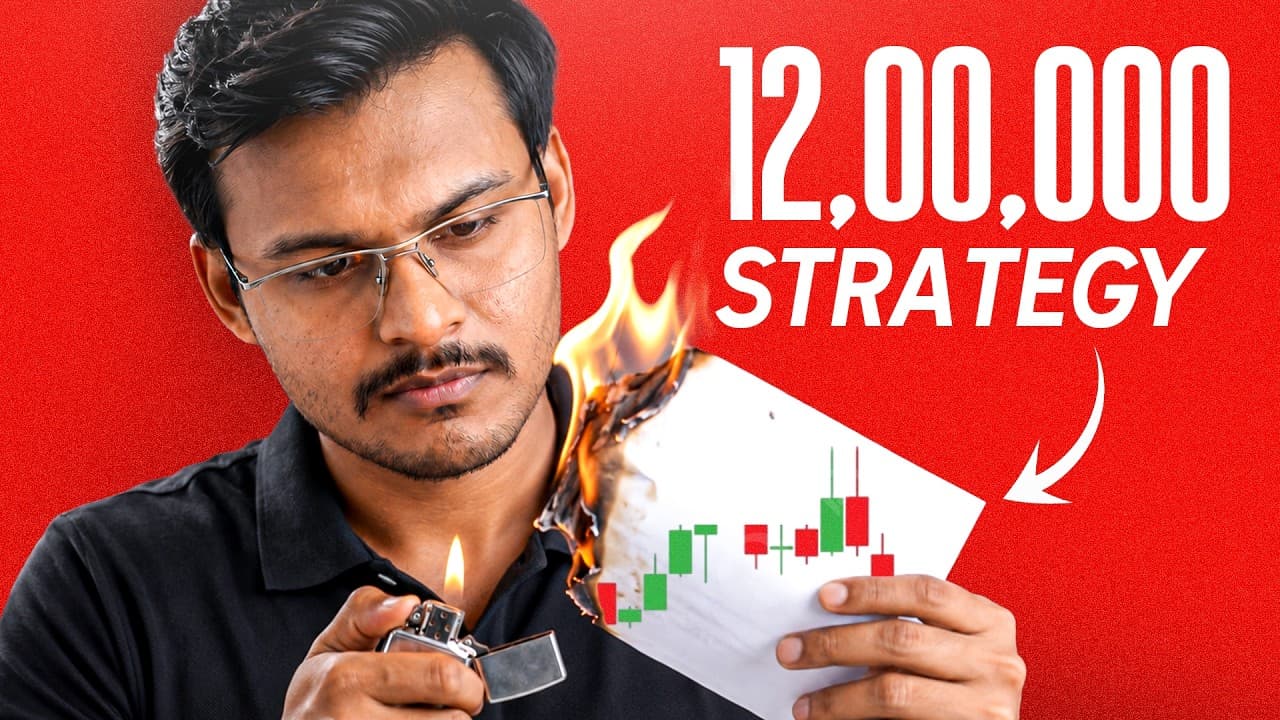
When to Quit a Profitable Intraday Strategy
Rs 12 lakh in profit looked different after Sidhant counted the 1,500 hours and the freedom the strategy had consumed.

How to Execute Trading Exit Strategies Effectively
Discover how Fahad's team approaches exit strategies and why timing is crucial.

Bitcoin Market Analysis and Trading Strategy Insights 2026
Explore 2026's top strategies for Bitcoin trading amidst market volatility.
Get post alerts in your inbox.
New blog post? We'll email you. No spam, unsubscribe anytime.
Join our Telegram community.
Get post alerts, trading discussions, and market updates.