Effective Bitcoin Shorting Strategy for 2023 Market Turns
Explore Fahad's strategy for shorting Bitcoin below 63,200 and learn from market analysis.
10 min read

Bitcoin was sitting at 64,152 and Fahad called the short. No hesitation, no second-guessing. Just clean market structure reading and a clear target below 63,200. That's what a disciplined bitcoin shorting strategy 2023 looks like in practice. Not a random pump play, not a gut feeling. A setup built on price correction expectations, volume confirmation, and an understanding of where the market was likely to break. We watched it unfold live on stream, debated the levels as a team, and this post breaks down exactly what we saw, why we called it, and what every trader should take away from the session. Knowledge and money both are to be made from streams, and this one delivered on both counts.
Key Takeaways
- Shorting Bitcoin at 64,152 with a target below 63,200 worked because market structure and volume backed the correction thesis.
- Volume placement relative to price, not just volume size, reveals whether a move has real conviction or is setting up a reversal.
- Documenting your pre-trade thesis and comparing it to outcomes is the only reliable way to turn mistakes into real edge.
- Reading market structure across multiple timeframes, not just one chart, is what turns a setup into a high-probability trade.
- Psychological discipline is a trained skill, not a personality trait, and it matters more than any individual setup.
How to Short Bitcoin Below 63,200?
To short Bitcoin below 63,200, Fahad's approach was straightforward: enter at 64,152, set the target below 63,200, and align stop losses with live market reactions rather than arbitrary fixed numbers. The reasoning was a clear expectation of price correction. The market had shown signs of exhaustion and Fahad wasn't going to wait for confirmation that came too late.
So here's the thing. Most traders see a level like 63,200 and freeze. They want more confirmation. They want another candle. Then the move happens without them. Fahad called it early because the market structure was already telling the story.
Bitcoin was trading at approximately $63,028 at the time, sitting below key technical markers including the 200-Day Moving Average at $75,500 and the True Mean Price at $76,300, which CoinDesk noted left BTC in technical no man's land with major support levels far below. That broader context made the short case even cleaner.
"Honestly, this seems like a manipulation move," Fahad said on stream. That read was critical. When price pumps with no real volume behind it, that's not strength. That's a trap.
The setup wasn't about being bearish for the sake of it. It was about reading what the market was actually doing versus what retail traders were hoping it would do. And those two things were pointing in completely opposite directions at that level.
For anyone who wants to understand how we approach liquidity zones before entry, our breakdown of Bitcoin liquidity levels covers the exact methodology we use as a team.
Bitcoin Short Strategy Levels
| Action | Level | Reasoning |
|---|---|---|
| Entry (Short) | $64,152 | Price showing exhaustion at resistance, manipulation move flagged |
| Primary Target | Below $63,200 | Key structural level, correction expected |
| Stop Loss | Above last reaction high | Aligned with live market reaction, not fixed pip count |
Just because the market is moving doesn't mean you should trade. That's one of the most important filters we apply, and the 64,152 entry was a case where the setup genuinely earned the trade.
Why is Volume Crucial in Market Analysis?
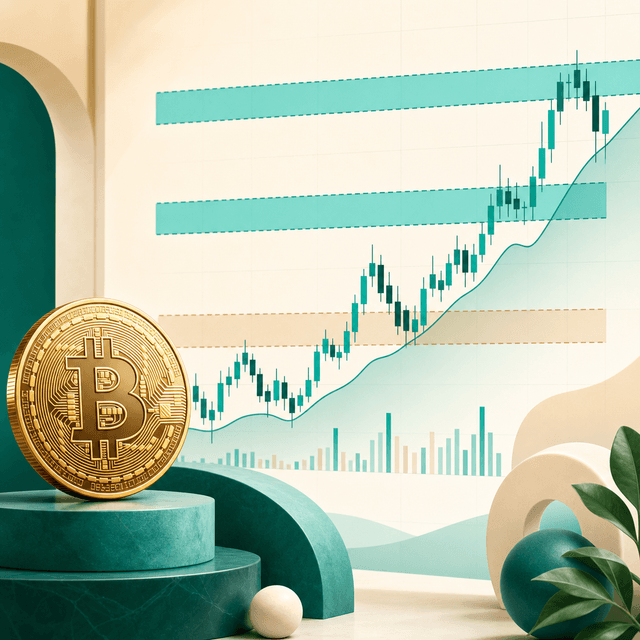
Volume acts as the market's lie detector. It confirms whether a price move has real conviction behind it or whether it's just noise. In trading, the difference between those two things is the difference between a good entry and a painful one. High volume on a move signals genuine market activity. Low volume on a pump? That's where Fahad's "manipulation move" read comes from.
Right, so why does this matter so much for a bitcoin shorting strategy in 2023? Because BTC had been printing moves that looked bullish on price alone. But volume wasn't confirming. The strength of those price movements was hollow, and hollow moves reverse.
Here's the thing about volume that most beginners miss: it's not just about whether volume is high or low. It's about WHERE volume is high or low relative to price. Volume at resistance tells you sellers are active. Volume drying up on a push higher tells you buyers are losing conviction. (And this is where it gets interesting, because the market can look bullish while actually setting up a flush.)
On the stream, we watched the price action at those upper levels and the volume profile was telling a different story than the price chart alone. Fahad flagged it clearly. The team agreed.
"I mean, you can't always just follow the trend." Sometimes the trend is the trap. Volume is what separates the real moves from the fakes.
For traders who want to go deeper on reading order flow alongside volume, mastering price action and order flow is where we'd send you next. Understanding volume in isolation is only half the picture.

Learning from Trading Mistakes
Mistakes are integral to the trading learning curve. Fahad is direct about this, and it's not a motivational poster sentiment. It's a practical reality. Reflecting on errors, adjusting strategies based on what actually happened, and staying honest about where your read was wrong, that's what compounds into edge over time. Pretending mistakes didn't happen is how traders stay stuck.
"Making mistakes is a part of the journey." Fahad said it on stream with genuine conviction, not as a throwaway line. The context was a discussion about past trades that didn't go as planned. The point was clear: the traders who grow are the ones who review, not the ones who delete the trade from memory.
Oops, that was a mistake I made. That kind of honesty, said out loud on a live stream in front of hundreds of viewers, is actually rare. Most trading content only shows the wins. We show the process.
So what does reflection actually look like in practice? A few things we've seen work:
- Write down your reasoning BEFORE the trade. Not after. After, your brain will rationalize anything.
- Compare your pre-trade thesis to what actually happened. Did the market do what you expected? If not, why not?
- Identify whether the mistake was process-based or outcome-based. A good process can produce a bad outcome. A bad process that produces a good outcome is the most dangerous thing in trading.
- Adjust one variable at a time. Changing everything after a loss means you won't know what actually needed fixing.
Every single day, live streaming, you will always learn something new. That's not marketing. Watching a live trader work through a real setup, flag a mistake in real time, and adjust on the fly is a different education entirely from reading a textbook.
The current geopolitical situations and macro uncertainty in 2023 made the learning environment even more demanding. Markets were moving on news, on sentiment, on things that didn't fit clean technical patterns. That's exactly when psychology and process discipline matter most.
For a broader look at how accountability structures keep traders honest about their mistakes, Hitpoint's trader accountability strategies lay out the framework we actually use.
Understanding Market Structure with Fahad
Market structure analysis gives traders a map of where price has been and, more usefully, where it's likely to stall or break. Recognizing patterns like higher highs, lower lows, and key structural breakpoints means you're not just reacting to price. You're anticipating it. That's the strategic advantage that separates disciplined traders from people who are just clicking buttons.
Look, market structure isn't complicated. It's just ignored. Most traders are so focused on indicators (RSI, MACD, whatever) that they forget to ask the most basic question: what is price actually doing?
On the stream, Fahad walked through the BTC structure around the 64,152 area. The market had formed a clear sequence of moves that suggested the buyers were running out of fuel. The structure was showing potential breakpoints, areas where, if price failed to hold, the next leg down became highly probable.
"It's important to understand the market structure." That means understanding it at multiple timeframes simultaneously. The daily structure might show a downtrend. The hourly might show a temporary consolidation. The 15-minute might look like a bounce. Knowing which one to trade, and when, is the actual skill.
A few structural signals the team flagged during the session:
- Failed higher highs near the 64,152 zone. Buyers couldn't push price to a new high.
- Lower lows forming. Each pullback was making a lower low, classic downtrend structure.
- No volume confirmation on the attempted bounces. Weak bids, not strong ones.
This is also where understanding confirmation signals in trading becomes relevant, because structure alone tells you the setup, but confirmation tells you when to actually pull the trigger.
Anyway, the point is: structure reading isn't a mystical skill. It's pattern recognition built through screen time and honest review of what you got right and wrong.
Embracing Trading Psychology
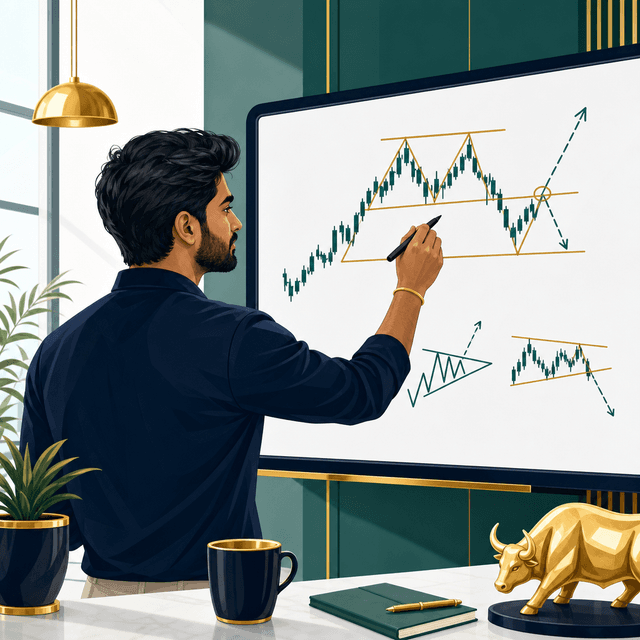
Maintaining psychological discipline is what separates traders who survive drawdowns from those who blow accounts. Managing emotions, specifically fear and greed, prevents the impulsive actions that destroy otherwise solid strategies. Rational decision-making in high-pressure moments isn't a personality trait. It's a skill, and it's trainable.
Honestly, this is the section that most trading content skips. Everyone wants to talk about setups and levels. Fewer people want to talk about the moment you're sitting at your desk, the trade is going against you, and every instinct is telling you to close it early or double down.
"That's the thing, it's not like I'm a perfect trader." Fahad said this on stream, and it landed differently than it would from someone pretending to have a 90% win rate. The admission was the point. Psychological discipline isn't about being emotionless. It's about having a process that holds even when emotions are running hot.
A few things the team has seen consistently across trading psychology discussions:
- Fear of missing out (FOMO) kills more accounts than bad setups. The trade you chase after it's already moved is almost never the trade you should take.
- Revenge trading after a loss is the fastest way to turn a small loss into a catastrophic one. "I would not want to run my mood." Fahad's way of saying don't trade angry.
- Overconfidence after a winning streak is just as dangerous as fear. Markets don't care about your last five trades.
- The discipline to sit on your hands when there's no clear setup is one of the hardest skills to build. And one of the most valuable.
The 2023 trading environment made all of this harder. Bitcoin's performance lagging behind broader markets created constant noise and conflicting signals. Traders who stayed disciplined and stuck to their process, like the framework we've built around the bitcoin shorting strategy 2023 approach, navigated it better than those who were reacting emotionally to every candle.
(And this is where it gets interesting: the traders who thrived weren't necessarily the ones with the best technical analysis. They were the ones who could execute their plan without letting a bad hour turn into a bad week.)
Experience translates into knowledge over time. But only if you're paying attention to the right things: your process, your emotions, your discipline, not just your P&L.

The stream covered a lot of ground, from a specific bitcoin shorting strategy 2023 setup at 64,152 to the deeper mechanics of why that trade made sense. Here's what the team takes away:
- The 63,200 short setup was built on structure, not guesswork. Entry at 64,152, target below 63,200, stops aligned with market reaction. Clean and specific.
- Volume confirmed what price was hinting at. Weak volume on bounces near resistance is a signal, not background noise.
- Mistakes are data. Review them honestly, adjust one variable at a time, and the edge compounds.
- Market structure reading across timeframes is the map. Confirmation signals are the trigger.
- Psychology is the final filter. A great setup executed emotionally is still a bad trade.
Every single day, live streaming, you will always learn something new, and that's exactly what drives what we do at Hitpoint. Join the Hitpoint community for live market coverage and real-time trade alerts. The analysis doesn't stop when the stream ends.
Watch the full stream: LIVE: Trading BTC, Gold, Silver | Orderflow & Footprint on YouTube
Disclaimer: This article is for educational purposes only and is not investment advice. Crypto assets are unregulated in India, are highly volatile, and can lose value rapidly; there is no established investor-protection or grievance-redressal mechanism for them. Trading With Sidhant LLP is not a SEBI-registered Investment Adviser or Research Analyst, and nothing here constitutes a recommendation to buy or sell any asset. Income from virtual digital assets is taxable in India at 30% plus applicable cess, with 1% TDS on transfers. Past performance is not indicative of future results. Do your own research before trading.
Frequently Asked Questions
- What is the strategy for shorting Bitcoin in 2023?
- Fahad's bitcoin shorting strategy for 2023 involved entering short at **64,152** with a target below **63,200**, using stop losses calibrated to live market reactions. The setup was grounded in price correction expectations, weak volume on upside moves, and clear market structure breakdown signals, not arbitrary levels or gut feeling.
- How do volume and market structure affect Bitcoin trading?
- Volume validates or invalidates what price is doing. A push higher on low volume signals weak buyers, a potential reversal setup. Market structure shows the sequence of highs and lows that define trend direction. Together, they give traders context for whether a move is real or a trap. Fahad flagged exactly this combination at the 64,152 level.
- What are some common trading mistakes to avoid?
- The most damaging mistakes are FOMO entries after a move has already happened, revenge trading after a loss, and failing to document your pre-trade reasoning. Overconfidence during winning streaks is equally dangerous. The fix is process: write your thesis before the trade, review it honestly after, and change one variable at a time when adjusting.
- Why is trading psychology important?
- Psychology determines whether a trader executes their strategy or abandons it under pressure. Fear causes early exits. Greed causes oversizing. Emotional decision-making turns a manageable loss into a catastrophic one. Fahad is direct about this: discipline isn't about being emotionless, it's about having a process that holds even when the market is doing something uncomfortable.
- How can tools like TradingView be used effectively?
- TradingView is most effective when used to read price structure and volume, not just to stack indicators. The team uses it to map key levels, identify structural breakpoints, and confirm setups before entry. The tool is only as good as the framework behind it. Understanding what you're looking for before you open a chart is what makes the difference.
Share this post

How to Use Direction Area Trigger in Nifty Trading
A Nifty short near 24,000 needed more than a pin bar: daily bias, a defined area and footprint evidence had to agree.
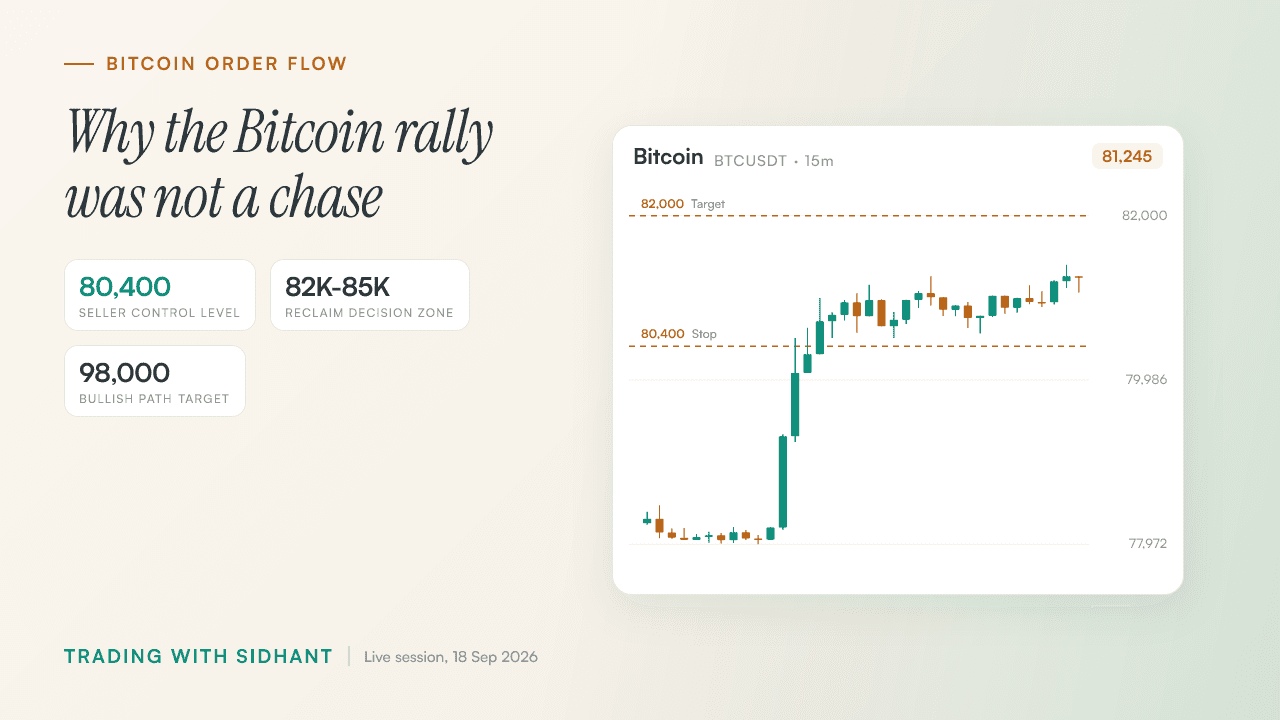
Bitcoin Order Flow Analysis After a Rally
Bitcoin had already rallied, so Fahad used 80,400, delta and seller exhaustion to explain why waiting beat a FOMO entry.
When to Quit a Profitable Intraday Strategy
Rs 12 lakh in profit looked different after Sidhant counted the 1,500 hours and the freedom the strategy had consumed.
Get post alerts in your inbox.
New blog post? We'll email you. No spam, unsubscribe anytime.
Join our Telegram community.
Get post alerts, trading discussions, and market updates.