Understand the Importance of Confirmation in Trading
Our team reveals why confirmation is crucial for successful trading.
10 min read
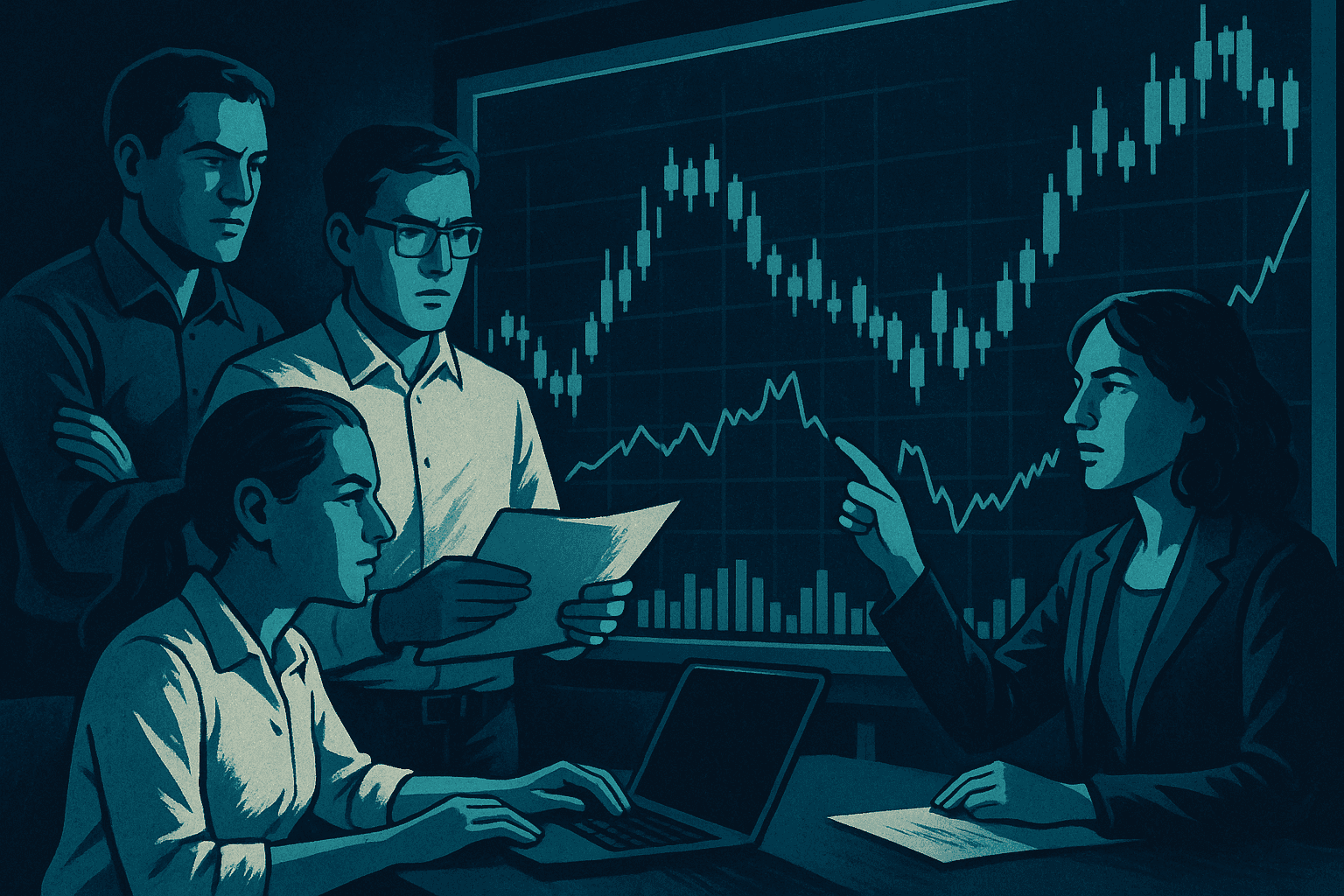
The importance of confirmation in trading hit home hard during one of Fahad's recent live sessions. Bitcoin was sitting in a tight sideways range, gold was showing potential short setups, and the temptation to jump in early was real. But Fahad held the line: 'If there's no confirmation, there's no trade.' Simple. Unambiguous. And honestly, the kind of discipline that separates traders who last from those who blow up their accounts chasing shadows. This session covered Bitcoin's expected major moves, emotional detachment, and practical risk management, and we're breaking it all down here.
Key Takeaways
- Marking levels is not enough. The market must confirm the setup before any entry is justified.
- Emotional attachment to outcomes is where most trading discipline breaks down. Detach from the result, focus on the process.
- Sideways Bitcoin markets are not neutral. They are compression phases that precede sharp directional moves.
- A tight, confirmation-based entry is itself a risk management tool. It naturally reduces stop distance and improves reward ratios.
- Discipline in waiting for confirmation compounds over time. It is the habit that separates consistent traders from gamblers.
Why is Confirmation Important in Trading?
Confirmation ensures that traders have additional assurance before entering a trade, reducing impulsiveness and aligning decisions with actual market signals. It is the difference between a disciplined entry and a guess dressed up as analysis. Without it, you are flipping a coin with your capital on the line.
Here's the thing. During the session, Fahad made this crystal clear. The market had levels marked. Everyone could see them. But having levels on a chart does not mean you trade them. You wait. You watch. You let the market come to you and show its hand first.
'If there's no confirmation, there's no trade.' That was the line. And he meant it.
So basically, what does confirmation actually look like in practice? It is a candle closing above a resistance level. A volume spike on a breakout. A rejection wick that holds. These are not optional extras. They are your green light. Understanding how to validate your trades with confirmation signals is one of the most underrated skills a trader can build.
The retail mistake we see constantly? Traders mark a level, price gets close, and they pull the trigger early because they are afraid to miss the move. Then price reverses, they get stopped out, and the trade they wanted would have worked if they had just waited. That's a crazy explanation for why most retail accounts underperform, but it happens every single day.
Fahad's approach on the stream was disciplined. No confirmation, no trade. And that discipline is backed by research: waiting for confirmation is one of the most profitable habits a trader can develop, because it filters out the noise and keeps you out of low-probability setups.
Confirmation Signals in Trading
| Signal | Description |
|---|---|
| Candle Close | Price closes above resistance or below support, confirming a breakout or breakdown |
| Volume Spike | Significantly higher volume on a move, validating the direction and intent |
| Rejection Wick | Long wick showing price tested a level and was rejected, confirming support or resistance |
| Moving Average Cross | Shorter MA crossing longer MA, confirming trend direction change |
| RSI Divergence | Price makes new high/low but RSI does not, signalling potential reversal confirmation |
| Retest Hold | Price breaks a level, pulls back to retest it, and holds, confirming the new structure |
The Role of Emotional Detachment in Trading
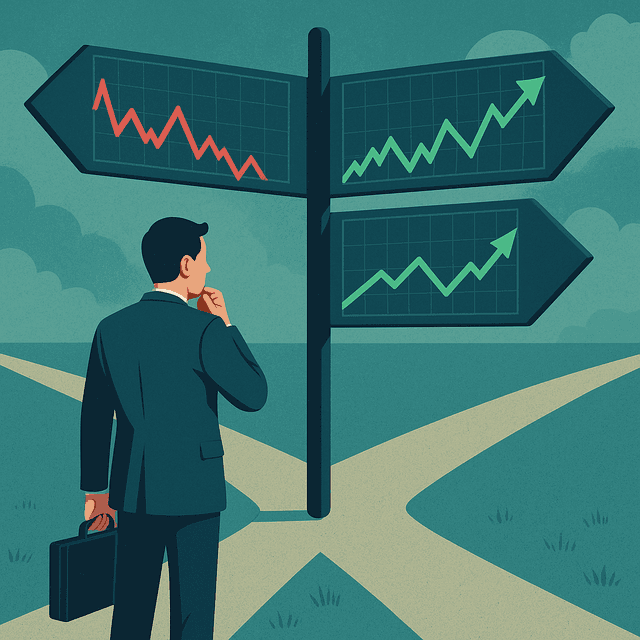
Emotional detachment in trading helps prevent emotions from clouding judgment, leading to more rational and effective decision-making. When you are attached to a trade's outcome (needing it to win, dreading a loss) your brain starts rationalising bad decisions. That is where the real damage happens.
This was the climax of the session. Fahad said it plainly: 'If you can detach yourself from trading and the outcome, you will be much happier.' And honestly, this landed differently on the stream than a lot of technical analysis does. Because it is not about charts. It is about psychology.
Think about what emotional trading actually looks like. You are in a position. It goes slightly against you. Instead of honouring your stop, you move it. You tell yourself the market will come back. Then it does not. And now a small loss is a big loss. You know what I mean? That entire sequence starts with emotional attachment to being right.
Wait, actually, detachment does not mean not caring. It means caring about the process, not the outcome. You execute the setup correctly, you manage the risk correctly, and then you let the market do what it does. If the trade works, great. If it does not, you move on without the emotional hangover.
Research on detachment and discipline in trading psychology confirms this: traders who separate their identity from individual trade results consistently outperform those who take every loss personally.
The session had a moment of genuine frustration. 'Nothing is happening,' Fahad said, and that frustration is exactly the emotional state that leads to bad trades. Boredom is a trader's enemy. Fahad acknowledged it and used it as a teaching point rather than a trigger for action. That is emotional discipline in real time.

Expectations for Major Bitcoin Moves
Our team, led by Fahad, identified potential major movements in Bitcoin's market during this session, pointing to the current sideways behaviour as a classic compression pattern that tends to resolve with a significant directional move.
Fahad's read on the session was direct: 'Right now, it's a sideways, so I do expect some major moves today.' Sideways markets are not boring. They are coiling. And when Bitcoin coils, the breakout tends to be sharp.
Honestly, the sideways price action was the setup. When price compresses into a tight range, it is building energy. Buyers and sellers are in equilibrium, but that equilibrium does not last. One side eventually runs out of ammunition, and when the range breaks, the move can be fast and aggressive.
The short setup on BTC was being watched carefully. The reasoning was straightforward: signs of reversal within the range, with the stop sitting at the top of the range. Small stop, defined risk, clear thesis. That is how you structure a trade in a choppy environment. (And this is where it gets interesting. The small stop-loss is not just about limiting loss, it is about improving your risk-to-reward ratio on the trade itself.)
For context on how Bitcoin behaves across different market sessions and why timing matters, understanding Bitcoin trading sessions is worth revisiting. The interplay between session opens and range breaks is real.
If you want to see how Fahad has handled Bitcoin setups in previous volatile periods, his bold short plays during market turmoil give solid context for the approach he brings to these setups.

Techniques for Managing Trading Risk
Effective risk management involves setting stop-losses, assessing market conditions honestly, and thinking through both the potential profit and the potential loss before the trade is placed, not after. Risk management is not something you bolt on at the end. It is built into the setup from the start.
Fahad's approach on the stream modelled this well. On the BTC short setup, the stop was described as 'pretty small.' Which is not luck, it is structure. When you wait for confirmation, your entry is tighter, which means your stop can be tighter, which means your risk is controlled without sacrificing the trade thesis.
Gold was also on the radar during the session. The setup was being watched for a short, with a wider stop to account for gold's tendency to whipsaw. That is a key distinction. Different assets require different stop placement. A stop that works for BTC might get you killed on gold.
Look, the post-analysis matters too. After a trade closes (win or lose) you go back and ask: did I follow my process? Was the entry confirmed? Was the stop placed correctly? That review is how you actually improve. Not by chasing the next trade immediately.
According to Investopedia's framework on confirmation in trading, traders who use confirmation-based entries tend to have more structured risk profiles because they are entering on validated signals rather than anticipation.
Risk Management Strategies
| Strategy | Description |
|---|---|
| Pre-defined Stop-Loss | Set the stop before entry based on structure, not on how much you are willing to lose |
| Position Sizing | Adjust position size so that a full stop-out equals a fixed percentage of your account |
| Confirmation-Based Entry | Only enter after a signal is confirmed, which naturally tightens the entry and stop |
| Post-Trade Review | Analyse completed trades against your process to identify pattern errors |
| Asset-Specific Stops | Adjust stop width based on the volatility characteristics of each specific instrument |
| No Revenge Trading | After a loss, step back before the next trade. Emotional re-entry is the fastest way to compound losses |
Practical Trading Decisions and Reminders
The session concluded with practical advice built around three pillars: confirmation before entry, timely and disciplined decisions, and staying connected to a community that holds you accountable. These are not abstract concepts. They were demonstrated live during the stream.
Final thoughts on confirmation came back around to the core message. You can have every level marked perfectly. You can have the right read on direction. But if the market has not confirmed the move, you are early. And early is often wrong.
'If you just feel that something is too good to be true, then it usually is.' That quote from Fahad applies directly to trade entries that look obvious before confirmation. The setup that looks like a no-brainer at first glance is often the setup that gets you, because everyone sees it, everyone piles in early, and the smart money uses that liquidity to push the other direction first.
I'm just saying, the importance of confirmation in trading is not a beginner concept. It is what separates consistent traders from the ones who have occasional big wins followed by wipeouts. The discipline to wait is the edge.
Community engagement was also part of the session energy. Fahad pushed for viewer interaction, and that is not just about likes. It is about building a group of traders who are learning the same discipline together. Trading alone, without accountability, makes it easier to cut corners on your process. You guys should definitely wait for confirmation, and having a community that reinforces that keeps you honest.
The Hitpoint crew spotted setups, debated them openly, and applied the same rules to every one. That consistency is the whole point.

This session was a masterclass in discipline over impulse. Here is what we took away:
- Confirmation is non-negotiable. Levels on a chart are just a map. The market has to confirm the route before you drive.
- Emotional detachment is a skill, not a personality trait. It is built through process, repetition, and honest post-trade review.
- Sideways markets are not dead markets. Bitcoin's compression during the session was a setup in itself, energy building before a directional move.
- Risk management starts at entry. Confirmation-based entries naturally tighten stops and improve risk-to-reward without extra effort.
- Community keeps you accountable. Trading in isolation makes it easier to rationalise bad decisions. The Hitpoint community exists to stop that.
The stream energy was high, the analysis was sharp, and the core message landed: wait for confirmation, manage your risk, and detach from outcomes. Join the Hitpoint community for live market coverage and real-time trade alerts. This is the kind of session that happens every week.
Watch the full stream: LIVE: Trading BTC, Gold, Silver | Orderflow & Footprint on YouTube
Disclaimer: This article is for educational purposes only and is not investment advice. The price levels, setups and trades described are a review of market events that have already occurred, shared to illustrate a method of analysis rather than to recommend any trade. Trading With Sidhant LLP is not a SEBI-registered Investment Adviser or Research Analyst, and nothing here constitutes a recommendation to buy or sell any security. Investments in securities markets are subject to market risks; read all the related documents carefully before investing. Past performance is not indicative of future results. Please consult a SEBI-registered financial adviser before acting on any information in this article.
Frequently Asked Questions
- Why is confirmation important in trading?
- Confirmation validates that a trade signal is genuine before you commit capital, filtering out false breakouts and impulsive entries. Without it, you are trading on anticipation rather than evidence. As Fahad put it during the session: 'If there's no confirmation, there's no trade.' Research supports this. Confirmation-based entries produce more structured risk profiles and higher probability setups over time.
- How does emotional detachment improve trading outcomes?
- Emotional detachment keeps you from moving stop-losses, revenge trading after losses, or holding losers out of ego. When your identity is not tied to each trade's result, you execute your process cleanly and accept outcomes without distortion. Fahad's session highlighted this directly: traders who detach from outcomes make better decisions and, as he put it, are genuinely 'much happier' in the long run.
- What are the signs of a sideways market?
- A sideways market shows price bouncing between a defined support and resistance level with no clear directional trend. Volume typically drops, candles get smaller, and neither buyers nor sellers dominate. During the session, Fahad identified Bitcoin in exactly this state and noted that sideways behaviour in crypto often precedes a sharp breakout move once one side of the range gives way.
- How can traders manage risk effectively?
- Effective risk management combines pre-defined stop-losses placed at structural levels, position sizing based on a fixed account percentage per trade, and confirmation-based entries that naturally tighten stop distance. Post-trade review is equally important, checking whether your process was followed, not just whether the trade was profitable. Fahad's session modelled all of these on live BTC and gold setups.
- What should be considered before taking a trade?
- Before entering any trade, confirm that a signal exists, not just that a level is nearby. Assess the stop-loss placement and whether the risk-to-reward justifies the trade. Consider the broader market context: is it trending or sideways? And check your emotional state. If you are bored, frustrated, or feeling like a setup is 'too good to be true,' those are reasons to pause, not accelerate.
Share this post

How to Use Direction Area Trigger in Nifty Trading
A Nifty short near 24,000 needed more than a pin bar: daily bias, a defined area and footprint evidence had to agree.
When to Quit a Profitable Intraday Strategy
Rs 12 lakh in profit looked different after Sidhant counted the 1,500 hours and the freedom the strategy had consumed.
How Bitcoin Open Interest Revealed Trapped Sellers
Bitcoin moved only about $100 near $78,000, but rising open interest revealed why a short could be premature.
Get post alerts in your inbox.
New blog post? We'll email you. No spam, unsubscribe anytime.
Join our Telegram community.
Get post alerts, trading discussions, and market updates.