Top Trader Accountability Strategies from Hitpoint Live
Discover Fahad's key insights on trader accountability and execution strategies discussed during the Hitpoint Live stream.
12 min read
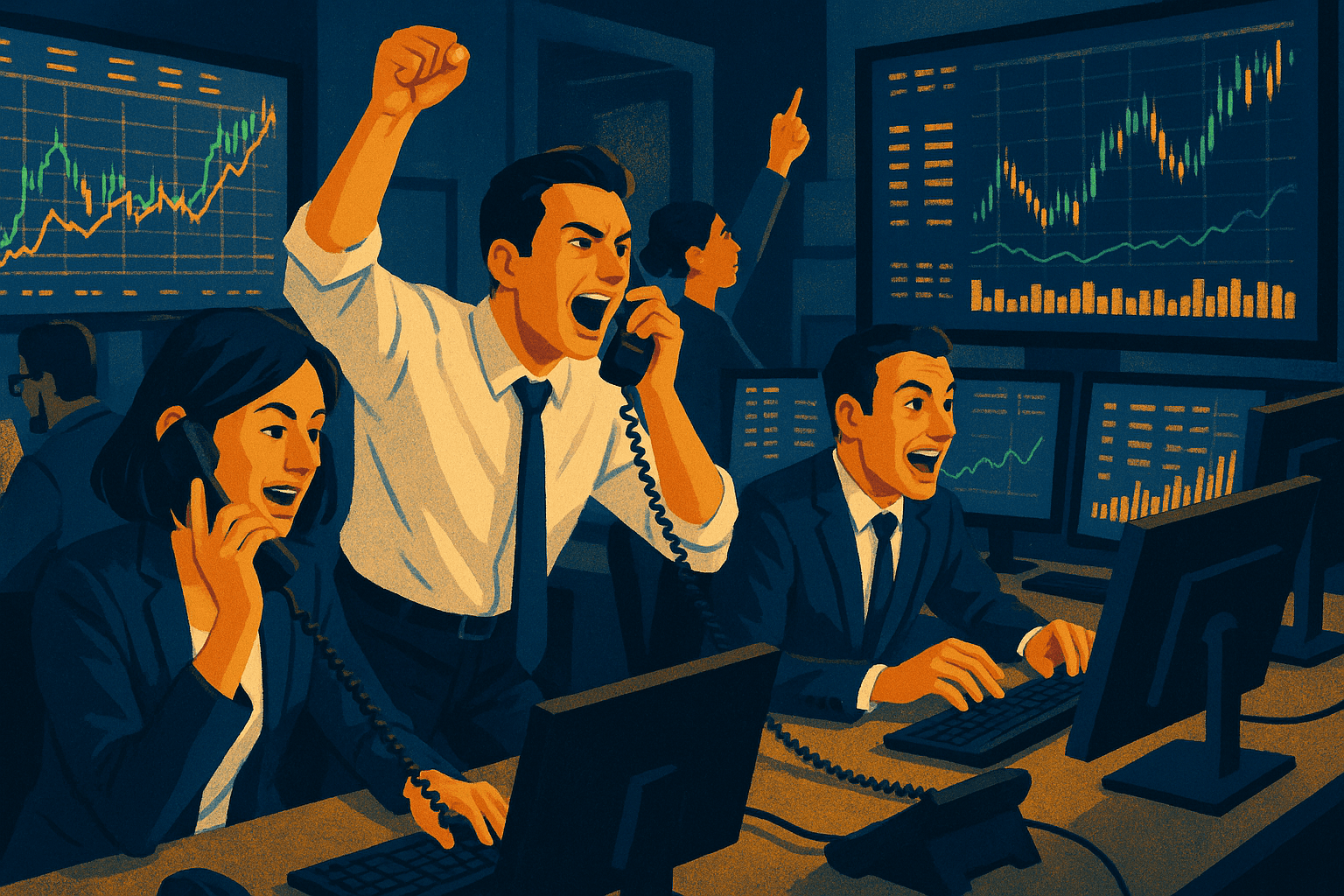
Fahad said it straight on the stream: 'You need to come up with a plan on how to beat the 99%.' That sentence landed differently than most trading advice. No fluff, no comfort. Just the raw truth that most traders are losing because they refuse to hold themselves accountable. Trader accountability strategies aren't just buzzwords. They are the actual difference between traders who survive and traders who blow up. On the Hitpoint Live stream, Fahad broke down exactly why emotional management, disciplined execution, and risk control are the pillars that separate the profitable minority from everyone else. This post covers every key insight from that session.
Key Takeaways
- Accountability creates the feedback loop that closes the gap between your trading plan and your actual execution.
- Dopamine addiction to the act of trading (not the outcome) is what drives overtrading and revenge trading.
- Discipline compounds. Every time you follow your plan under pressure, the next correct decision becomes slightly easier to make.
- Proper position sizing creates emotional stability. When you are correctly sized, you can think clearly instead of reacting from fear.
- The gap between knowing what to do and actually doing it is where edge gets destroyed. Execution is a skill built through repetition, not theory.
What are the Benefits of Trader Accountability?
Trader accountability is the foundation of trading discipline and execution. When traders hold themselves accountable for every decision (win or lose), they shift from reactive guessing to strategic decision-making. That shift is what builds sustainable success in the markets over time.
So basically, why do most traders fail? Not because the market is rigged against them. Not because they lack intelligence. They fail because nobody is watching them. And when nobody is watching, discipline disappears.
Fahad put it directly on the stream: 'You have to hold yourself accountable.' Not your broker. Not your mentor. You. That is the starting point for everything.
Now, this will hit very hard. Most traders treat accountability like a suggestion. They keep a journal for three days, then abandon it. They set rules, then break them the moment a trade goes sideways. And then they wonder why their results are inconsistent.
Accountability works because it forces a feedback loop:
- You plan the trade before entering, with a clear rationale
- You execute the trade according to that plan
- You review the trade against what you said you would do
- You identify the gap between intention and action
That gap (between what you planned and what you actually did) is where all the edge is lost. Right?
Fahad's framing on the stream was sharp: 'You need to come up with a plan on how to beat the 99%.' Think about that for a second. Everyone is thinking differently, every trader has their own biases, their own emotional triggers. The traders who beat the majority are not necessarily smarter. They are just more honest with themselves about their own mistakes.
Accountability also means reviewing losses without ego. If a trade went wrong, the question is never 'why did the market do this to me?' The question is 'did I follow my plan, and if not, why not?' That reframe alone changes how you process losing trades.
For the Hitpoint team, this showed up repeatedly in how Fahad structured the discussion. Always pulling the analysis back to personal responsibility. The market will do what it does. Understanding how order flow and footprint data can support better decision-making is useful, but only if you are disciplined enough to actually act on what the data tells you.
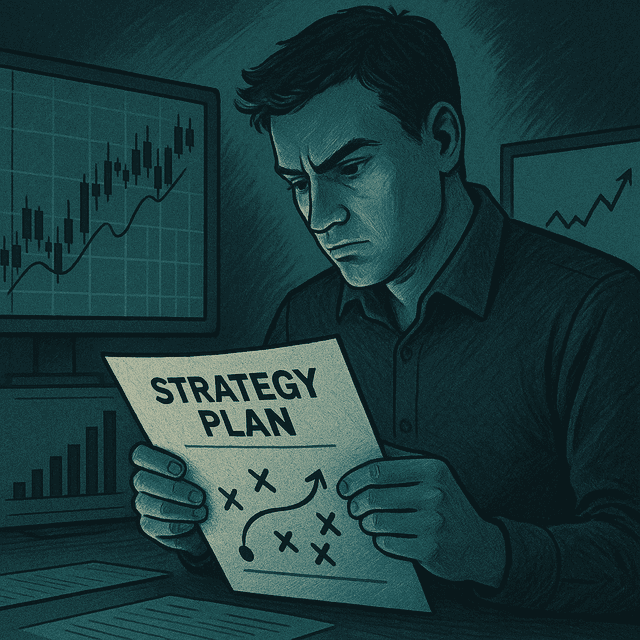
Honestly, what's your plan? If you cannot answer that in one sentence before a trade, you are not ready to be in that trade.
How Does Emotion Affect Trading?
Emotions like excitement and frustration can cloud judgment in trading. Managing those emotions is not about becoming a robot. It is about recognizing when your emotional state is driving the decision instead of your analysis. The traders who figure this out early are the ones who last.
The stream got real on this topic fast. Fahad's point was blunt: 'The more you mess around, the more you find out.' And what most traders find out (usually the hard way) is that their biggest enemy is sitting between their ears.
Look, the dopamine addiction problem in trading is real. (And this is where it gets interesting.) Every time you enter a trade, even a bad one, your brain releases dopamine. The excitement of the entry. The watching of the price. The hope of a winner. That chemical reward does not care whether the trade was good or bad. It just rewards the action. Which is why traders overtrade. Which is why they revenge trade. Which is why they know what they should do and still do the opposite.
Fahad called this out directly on the stream. Traders are not just battling markets. They are battling their own neurological wiring.
Emotional decisions in trading typically look like:
- Exiting a winning trade too early because you are afraid of giving back gains
- Holding a losing trade too long because accepting the loss feels like failure
- Entering trades out of boredom rather than because a setup is actually there
- Revenge trading after a loss, trying to 'win back' what the market took
The fix is not willpower. Willpower runs out. The fix is structure. Rules that you set when you are calm, that govern your behavior when you are not calm.
Trading is obviously all about probabilities. Fahad said this clearly on the stream. And if you understand probabilities, you understand that no single trade defines your edge. The edge plays out over hundreds of trades. One loss means nothing statistically. But emotionally? It can wreck your next ten trades if you let it.
Let me tell you this: your last trades do not define you. What defines you is how you respond to them.
For anyone studying how market sentiment and positioning drive price, Fahad's analysis of bold short plays during market turmoil shows exactly what it looks like to trade without letting emotion override the setup.
Why is Discipline Vital in Trading?
Discipline in trading means following through on your plan under pressure, even when every instinct tells you to deviate. It is not about being rigid. It is about trusting the work you did when you were thinking clearly, over the impulse you feel when you are in the heat of a trade.
Fahad's line on the stream was simple and direct: 'Don't get attached to your last trade.' That is a discipline statement. It means each trade is its own event. The previous trade (whether it was a winner or a loser) has zero bearing on the next setup.
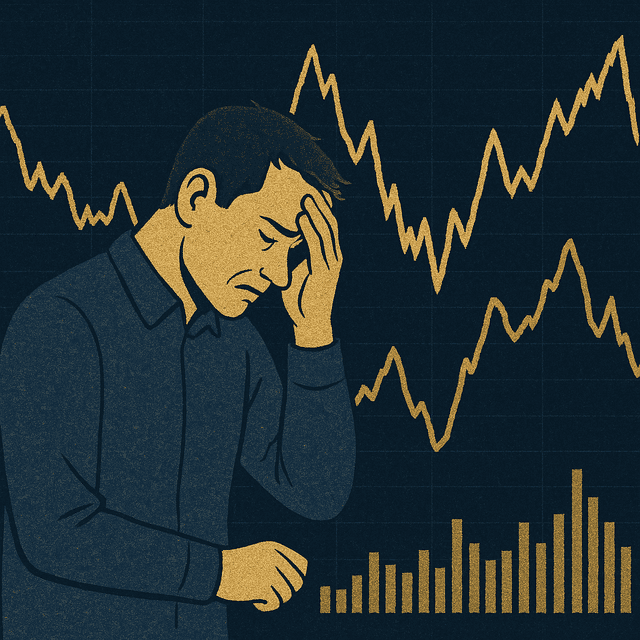
You know, honestly? Most traders know this intellectually. The problem is they cannot execute it emotionally. A big loss creates fear. A big win creates overconfidence. Both destroy discipline.
The Hitpoint team has watched this pattern repeat across traders at every level. The mechanics of discipline are not complicated:
- Pre-trade checklist: Does this setup meet your criteria? Yes or no.
- Position sizing: Are you sizing according to your risk rules, not according to how confident you feel?
- Entry and exit rules: Are they defined before you enter, or are you making them up as you go?
- Post-trade review: Are you logging every trade, including the ones you are embarrassed about?
Wait, actually, that's not it. Discipline is not just about following rules. It is about building the habit so the rules become automatic. The goal is to reach a point where your trading process runs on discipline the way a professional athlete runs on muscle memory.
Fahad also stressed accountability as the enforcement mechanism for discipline. 'You have to hold yourself accountable,' not just when things go well, but especially when they do not. If you had a loss in the last trade, don't give up. Review it. Learn from it. Then move on.
The session touched on something that resonates with anyone who has been trading for more than a year. Discipline compounds. Every time you follow your plan when it would have been easy not to, you make the next correct decision slightly easier. Every time you break your rules, you make the next break slightly more likely.
For context on how discipline plays out in live market conditions, the breakdown of how Bank Nifty sellers got trapped at 52000 is a good example of what happens when undisciplined positioning meets a market that doesn't care about your feelings.
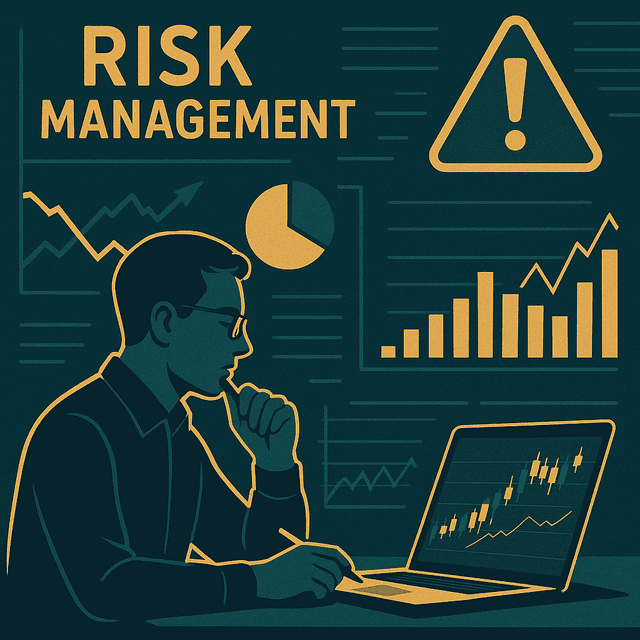
What are Effective Risk Management Techniques?
Effective risk management means setting clear stop-losses, sizing positions according to defined rules, and understanding that the goal is to minimize losses, not eliminate them entirely. Protecting capital is not a defensive strategy. It is what keeps you in the game long enough to actually win.
Fahad said something on the stream that the whole team agreed with: 'The day you master risk management, that's the end.' Not the end of your career. The end of your struggle. Because once risk management is locked in, the rest of trading becomes a question of refining your edge, not surviving your own mistakes.
Just understand this: you cannot control what the market does. You can only control how much you lose when you are wrong.
The core principles the stream covered:
- Minimize losses, not eliminate them. Losses are part of trading. The goal is to keep them small enough that winners outweigh them over time.
- Risk a defined percentage per trade. The widely referenced 1% rule from risk management frameworks, risking no more than 1% of capital on a single trade, is a starting point worth understanding.
- Stop-losses are not optional. A stop-loss is not an admission that you might be wrong. It is an acknowledgment that you are always potentially wrong, and you have a plan for that scenario.
- Position sizing drives outcomes more than entry points. Many traders obsess over the perfect entry and then size incorrectly. The entry matters less than you think. The size matters more.
Risk management also has a psychological component that does not get discussed enough. When you are properly sized on a trade, you can think clearly. When you are oversized, every tick against you activates fear, and fear kills execution. Effective risk management strategies consistently emphasize this link between position size and emotional stability.
The Hitpoint team watched Fahad walk through this in real time on the stream. The connection between knowing your max loss before entry and the calmness that follows. That calmness is not confidence in the outcome. It is confidence in the process.
And that's why traders who manage risk well tend to stay in the game. Not because they never lose. Because their losses never become catastrophic.
How Can Traders Enhance Execution?
Enhancing execution requires thorough planning before the session starts and strict adherence to that plan once the market opens. Traders who execute well are not making decisions in real time. They are implementing decisions they already made. The market open is for execution, not for thinking.
Fahad's challenge to the stream was direct: 'You have time? Just start! I'm telling you, you don't have time.' The urgency was not about rushing into trades. It was about stopping the endless preparation loop that never converts into actual execution.
The point is, most traders are over-prepared on theory and under-prepared on execution. They know the concepts. They have watched the videos. They understand the setups. And then the market opens and they freeze, or they deviate, or they enter late because they waited for 'more confirmation.'
Execution is a skill. And like any skill, it improves with deliberate repetition and honest review.
Comparison of trading execution strategies:
| Strategy | Execution Timeframe | Expected Outcome |
|---|---|---|
| Pre-session planning with defined levels | Before market open | Clear entry/exit criteria, reduced in-session decision fatigue |
| Risk-reward assessment before entry | At setup identification | Trades only taken when reward justifies risk |
| Strict stop-loss placement | At order entry | Losses capped, capital preserved for next opportunity |
| Post-session trade review | After market close | Identifies execution gaps between plan and actual behavior |
| 30-day accountability challenge | Daily over one month | Builds execution habit through consistent repetition and logging |
The 30-day challenge concept came up in the stream. Committing to a structured review process every single day for a month. Not to be perfect. To be consistent. Consistency in the process is what eventually produces consistency in results.
Fahad's framing of 'slow progress is not good progress' in this context is important. It is not about rushing. It is about removing the delay between knowing what to do and actually doing it. That gap is where edge gets destroyed.
For traders who want to see what systematic execution looks like in practice, the strategic moves during the Bank Nifty 550-point surge is a useful case study in how pre-planned decisions execute cleanly when the move arrives. And for those working on reading market structure to improve entry timing, footprint trading and order flow analysis provides the technical framework that supports better execution decisions.
You need to get started today. Not tomorrow. Not after one more week of paper trading. The market is a real-time feedback machine, and you only learn execution by executing.

The Hitpoint Live session with Fahad covered ground that most trading content avoids. The uncomfortable truth that strategy is the easy part. The hard part is you.
Here are the lessons that mattered most:
- Accountability is the foundation. You have to hold yourself accountable for your plan, your execution, and your review process. Nobody else will do it for you.
- Emotions are not the enemy. Unmanaged emotions are. Recognize the dopamine loop, the revenge trade impulse, the fear of realizing a loss. Name it, then have a rule for it.
- Discipline compounds. Every correct decision under pressure makes the next one slightly easier. Every broken rule makes the next break slightly more likely.
- Risk management is not defensive. It is what keeps you in the game. Minimize losses. Size correctly. Let the edge play out over many trades.
- Execution is a skill. Stop preparing to prepare. Start executing, reviewing, and improving.
Anyway, you will get there, but only if you actually start. Join the Hitpoint community for live market coverage and real-time trade alerts, and put these strategies into practice alongside traders who take accountability seriously.
Watch the full stream: You Learned Trading So Why Are You Still Losing? on YouTube
Disclaimer: This article is for educational purposes only and is not investment advice. The price levels, setups and trades described are a review of market events that have already occurred, shared to illustrate a method of analysis rather than to recommend any trade. Trading With Sidhant LLP is not a SEBI-registered Investment Adviser or Research Analyst, and nothing here constitutes a recommendation to buy or sell any security. Investments in securities markets are subject to market risks; read all the related documents carefully before investing. Past performance is not indicative of future results. Please consult a SEBI-registered financial adviser before acting on any information in this article.
Frequently Asked Questions
- What are the key strategies for trader accountability?
- The key strategies for trader accountability are pre-trade planning, post-trade review, and honest logging of every decision, including the ones you are embarrassed about. Fahad emphasized on the stream that you must hold yourself accountable for the gap between your plan and your actual execution. Journaling, checklists, and daily review sessions are the practical tools that make accountability real rather than theoretical.
- How do emotions impact trading decisions?
- Emotions impact trading by triggering decisions that override your pre-set plan. Overconfidence after a win, fear after a loss, or dopamine-driven overtrading. The brain rewards the act of entering a trade regardless of whether it is a good trade. Fahad described this dopamine addiction as one of the biggest structural problems traders face. Structure and rules set during calm moments are the antidote to in-session emotional decisions.
- What is the role of discipline in trading?
- Discipline ensures that traders follow their plans under pressure rather than reacting to in-the-moment impulses. It is the mechanism that converts a good strategy into consistent results. Fahad's point was direct: don't get attached to your last trade, because attachment to past outcomes is what breaks discipline going forward. Discipline is built through repetition and honest self-review, not willpower alone.
- How can traders manage risks effectively?
- Traders manage risk effectively by defining maximum loss per trade before entry, sizing positions according to fixed rules rather than confidence levels, and placing stop-losses without exception. The goal, as Fahad stated, is to minimize losses, not eliminate them. Risk management frameworks like the 1% rule provide a starting structure. The deeper principle is that correct sizing creates the emotional stability needed to execute clearly.
- Why is emotional management crucial for traders?
- Emotional management is crucial because unmanaged emotions are the primary cause of deviations from a trading plan. Fear, greed, and the dopamine response to trade entries all push traders toward decisions that feel right in the moment but violate their strategy. Fahad's core message was that your last trades do not define you, but your emotional response to them will determine whether your next trades are disciplined or reactive.
Share this post

How to Use Direction Area Trigger in Nifty Trading
A Nifty short near 24,000 needed more than a pin bar: daily bias, a defined area and footprint evidence had to agree.
Bitcoin Order Flow Analysis After a Rally
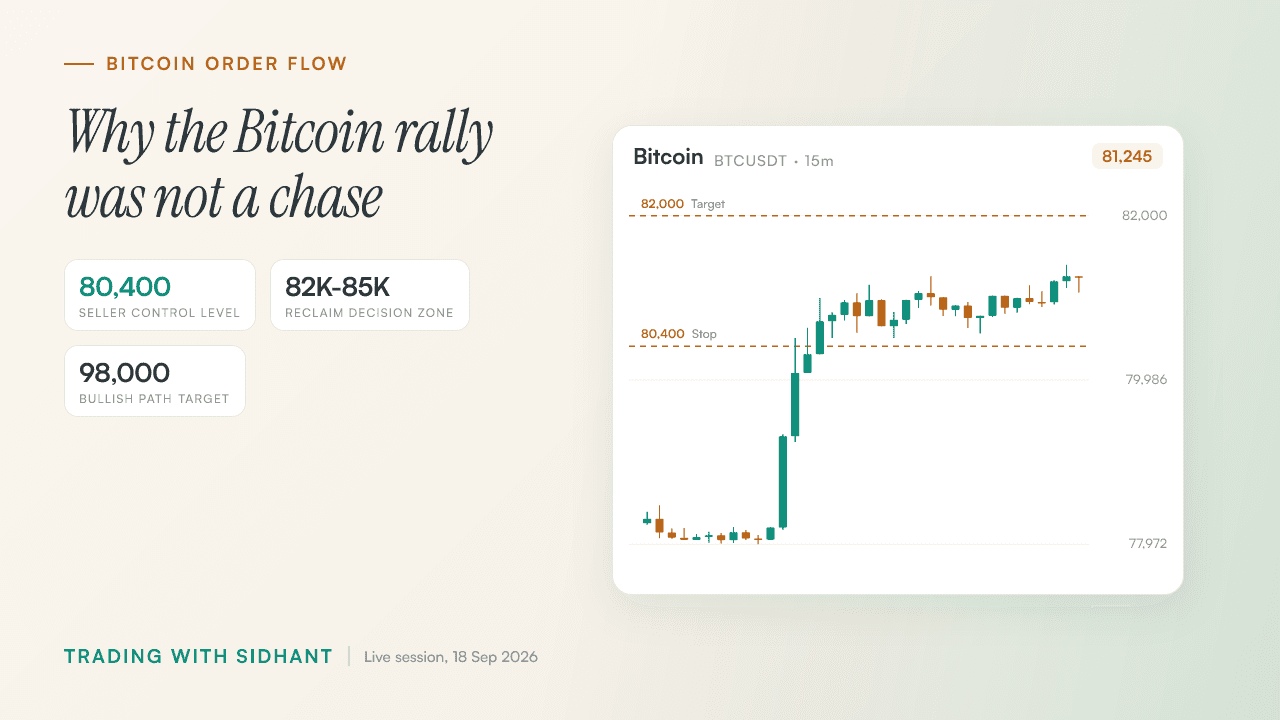
Bitcoin had already rallied, so Fahad used 80,400, delta and seller exhaustion to explain why waiting beat a FOMO entry.
When to Quit a Profitable Intraday Strategy
Rs 12 lakh in profit looked different after Sidhant counted the 1,500 hours and the freedom the strategy had consumed.
Get post alerts in your inbox.
New blog post? We'll email you. No spam, unsubscribe anytime.
Join our Telegram community.
Get post alerts, trading discussions, and market updates.