Mastering Price Action: Fahad's Insights on Trading
Our team reveals how to master price action, with Fahad sharing key insights on avoiding emotional trading decisions.
9 min read
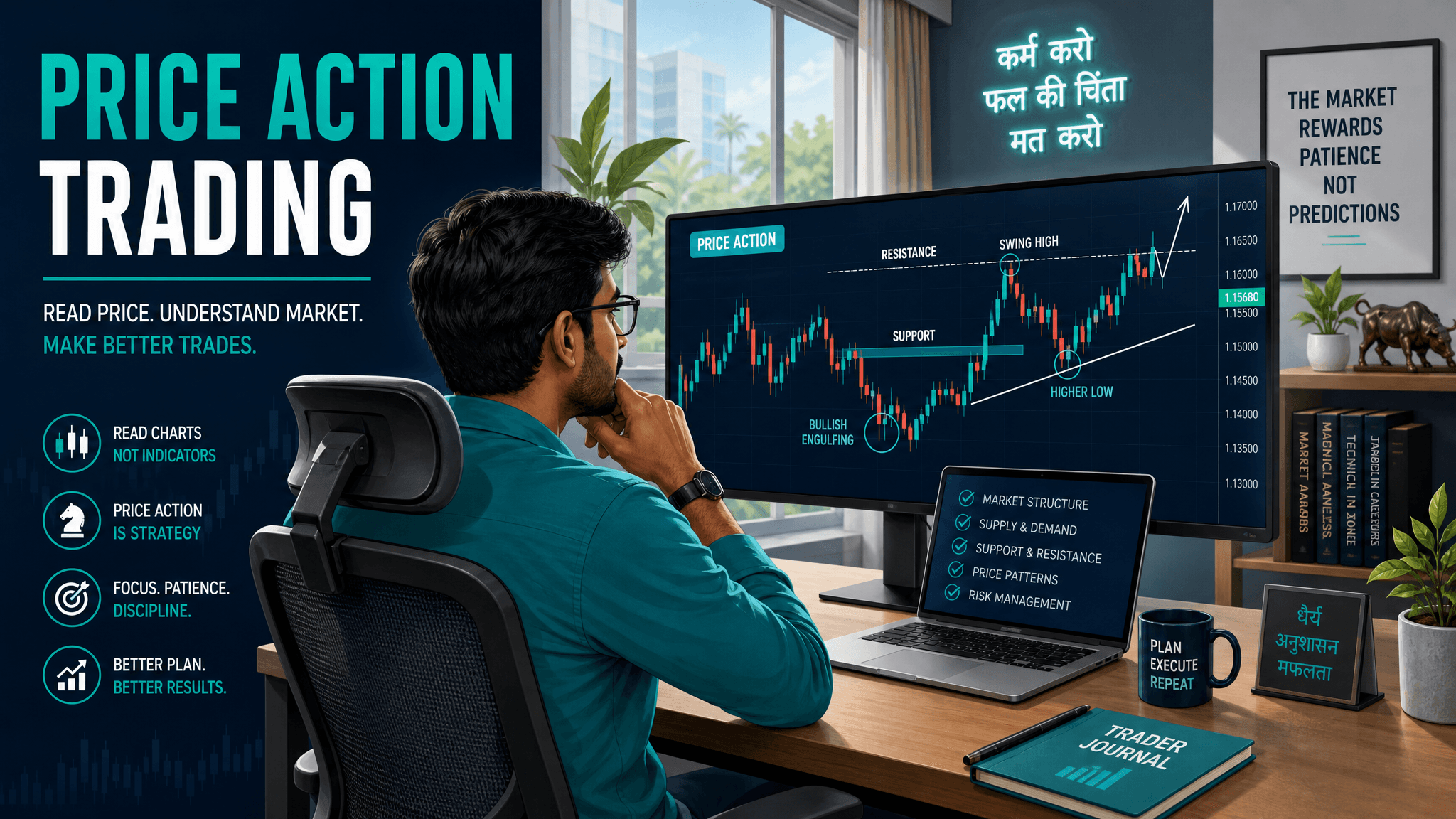
The market was hilarious that session. Fahad's words, not ours. But behind the laughs? A serious lesson on how to use price action in trading, and why so many traders keep getting it wrong. No indicators, no lagging signals, just raw price movement, key levels, and the discipline to read what the market's actually telling you. Bitcoin was hovering around $65,000, oil was setting up a short, and Fahad was in full flow, breaking down setups, calling out emotional trading traps, and explaining why being too smart in trading is often your biggest enemy. This is what we covered.
Key Takeaways
- Reading raw price movement at key levels gives you more clarity than any indicator-based system ever will.
- Indicators lag behind price, trading off raw price structure keeps you in the moment, not three candles behind it.
- Pre-defining every trade parameter before you enter is the single best defense against emotional decision-making mid-trade.
- Bitcoin's consolidation around $65,000 presented a defined risk-reward long setup, entry, target, and stop all visible on raw price structure alone.
- Separating strategies across multiple accounts keeps risk compartmentalized and prevents one bad trade from contaminating your entire trading mindset.
What is Price Action Trading?
Price action trading focuses on historical price movement to make trading decisions, without relying on indicators. It's reading raw market data, candlestick patterns, support and resistance levels, the structure of price itself, to understand where the market's likely to go next. No RSI, no MACD, just the chart telling its own story.
So basically, most traders come into markets loaded with tools. Moving averages, oscillators, Bollinger Bands, the whole toolkit. And honestly? A lot of that noise drowns out the one signal that actually matters: price.
Fahad put it plainly on the stream: "I don't use indicators; I focus on price action." That's not a flex, it's a methodology. When you strip away the indicators, you're forced to actually understand what buyers and sellers are doing at specific levels, and that understanding separates traders who react from traders who read.
Here's the thing, price action isn't a magic system, it's a skill. Like any skill, it takes time to develop. According to Investopedia's introduction to price action trading strategies, the core of price action analysis is identifying patterns in price movement that suggest future direction, patterns that emerge from market psychology, not from a formula.
What Fahad emphasizes is mastering those movements at key levels, not guessing, not hoping, but watching how price behaves when it hits a significant area. Does it reject? Does it consolidate? Does it break through with conviction? That behavior tells you more than any indicator ever could.
Want to build this kind of framework from scratch? This guide on building a trading strategy covers the foundational thinking that supports price action as a core methodology.
The point is: price action isn't about predicting the future, it's about reading the present with enough clarity to act decisively when an opportunity lines up.
Why Does Fahad Avoid Using Indicators?
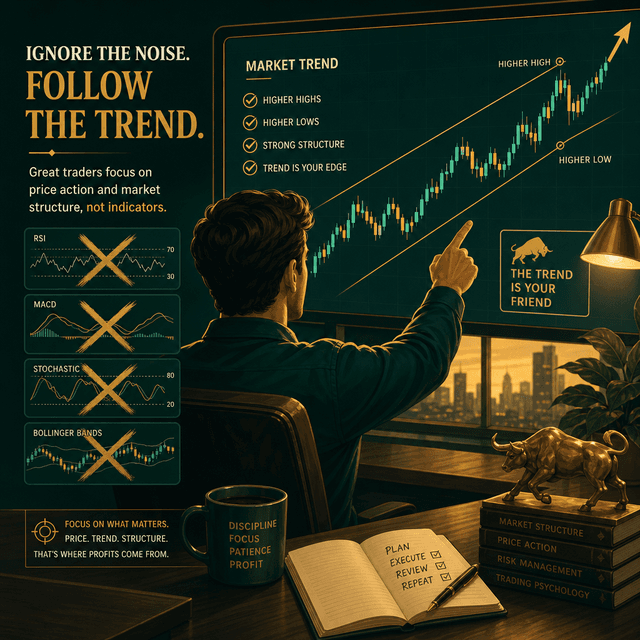
Fahad believes that focusing on price action provides a clearer understanding of market trends, as indicators can often mislead traders. Indicators are derivatives of price, they tell you what price already did, not what it's doing right now. By the time an indicator fires a signal, the move has often already started, or worse, it's nearly over.
This is where most traders get burned. They see a crossover on the MACD and jump in, but the crossover happened three candles ago, the easy money is gone, and now they're chasing.
Fahad's stance on this is blunt: "Look, you can't be too 'smart' in trading." And he means it. Traders who layer indicator on top of indicator convince themselves they're being thorough, but they're actually building a confirmation bias machine. Every new tool they add just gives them another reason to see what they want to see.
Wait, actually, there's a deeper point here. Indicators don't fail because they're badly designed, they fail because they're applied incorrectly, in the wrong context, by traders who don't understand what the indicator is actually measuring. Research on mastering price action makes the same argument: the market's raw price data already contains all the information you need, if you know how to read it.
So what does Fahad look at instead? Structure. Where did price come from? Where did it stall? Where did it reject? Those are the real signals. A clean support level that has been tested three times tells you far more than a stochastic oscillator ever will.
The common misconception is that more data equals better decisions. It doesn't, it equals more noise. Fahad's edge comes from cutting that noise and focusing on what price is actually doing, right now, at this level, in this context. That's it.
If you're interested in how confirmation in trading plays into price action decisions, that's a concept worth studying alongside this approach.
How to Manage Emotional Trading Decisions?
Emotional stability in trading is essential. Fahad's advice is direct: never make decisions out of frustration or anger, and never let external pressure push you into a trade your analysis doesn't support. The market doesn't care about your feelings, and your feelings will absolutely destroy your edge if you let them.
Honestly? This is the section most traders skip because they think it doesn't apply to them. It applies to everyone.
Fahad was clear on the stream: "I'm not here to make decisions out of anger." That came up mid-session, after a trade got stuck, "It's been stuck there for an hour," and the frustration was real. The market was choppy, nothing was moving cleanly, and that's exactly when emotional trading decisions get made. You're bored, you're frustrated, you force a trade that isn't there.
The discipline is in not doing that.
Here's how we break it down:
- Identify your emotional state before you trade. Are you calm? Are you chasing a loss? Are you angry at a missed move? If the answer is anything other than neutral, step back.
- Have a pre-defined plan for every trade. Entry, target, stop, written down before you enter. This removes the in-trade decision-making that emotion hijacks.
- Accept that red days happen. As Fahad put it, "If you're having a red day, let me make sure it's a green day for you," meaning, the structure and the setup matter more than the outcome of any single trade.
- Don't revenge trade. Ever. A loss is information, revenge trading turns information into a second loss.
(And this is where it gets interesting.) The best traders we've watched don't have fewer emotional reactions than everyone else, they just have better systems for not acting on those reactions. That's the whole game.
For a broader look at how accountability structures help traders stay disciplined, Hitpoint's trader accountability strategies are worth reviewing alongside this.

Fahad's Predicted Levels for Bitcoin
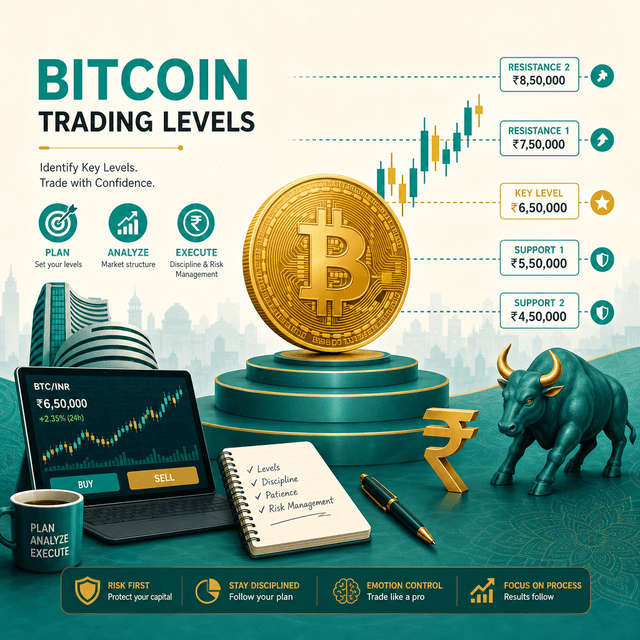
According to Fahad, Bitcoin showed potential for upward movement during the session, with clear target levels identified for traders looking to position with the trend. With BTC consolidating around $65,000, Fahad spotted a setup for a long, entry at $65,500, target at $67,000, stop below $64,000.
The reasoning was straightforward. Price had been consolidating, the structure supported a continuation move upward, and as Fahad said with conviction, "I think this week can be bullish." Not because of an indicator, because of what price was doing at that level.
For context on Bitcoin's broader market behavior for traders tracking these moves, the Bitcoin market outlook for Indian traders covers the macro picture that frames setups like this one.
Bitcoin Price Prediction
| Entry | Target | Stop |
|---|---|---|
| $65,500 | $67,000 | Below $64,000 |
The oil setup was running the other direction. OIL was shorted at $79,234, targeting the previous day's low, with a stop above recent highs. Two different assets, two different directions, both called purely off price structure. You know what I mean? That's what price action gives you, the flexibility to trade the setup in front of you, not the bias you walked in with.
Fahad also noted, "I don't think this is a finished business" when discussing the Bitcoin move mid-session, skepticism that kept the team from over-committing before confirmation arrived. That kind of discipline is what separates a good read from a reckless one.
The Benefits of Using Multiple Trading Accounts
Fahad uses multiple trading accounts to isolate different strategies and prevent unnecessary risks, preferring non-KYC environments for flexibility. The logic is clean: if every trade lives in the same account, your risk exposure bleeds across strategies. One bad trade in one strategy can affect your mental state, and your margin, for a completely unrelated setup.
Fahad was direct about this on the stream: "I personally have three or four accounts at Binx." Not to spread thin, to stay organized.
Here's how the thinking works:
- Strategy isolation. Each account runs a specific approach. Scalps in one, swing setups in another. You don't mix timeframes or risk profiles inside a single account.
- Emotional separation. A losing scalp doesn't contaminate your swing trade mindset. The accounts are separate, the P&L is separate, the psychology stays cleaner.
- Non-KYC flexibility. For crypto specifically, non-KYC environments give traders the ability to operate without the friction of identity-linked accounts, useful for testing strategies at smaller sizes without bureaucratic overhead.
- Risk management clarity. When your capital is partitioned, your position sizing becomes more deliberate. You know exactly how much is at risk in each strategy context.
Anyway, this isn't about hiding anything or gaming the system, it's about structure. Good traders are obsessed with structure, in their charts and in their accounts. The separation forces discipline.
For traders who want to understand how order flow and deeper market structure thinking connects to this kind of account-level organization, mastering footprint trading and order flow is a solid next read. It's fine to start simple, one account, one strategy, and build from there. But knowing the destination helps.

That session covered a lot of ground, and the core lessons held together tightly. Here's what we'd pull out as the real takeaways:
- Price action works because it's direct. You're reading what the market is actually doing, not a lagging derivative of it. That edge is real.
- Indicators aren't the enemy, over-reliance on them is. Strip them away and learn to read structure first. Add them back only if they genuinely add clarity.
- Emotional decisions are the fastest way to blow a good setup. Fahad's rule is simple: if you're angry, step away. The market will still be there.
- Defined levels matter. The Bitcoin long from $65,500 to $67,000 with a stop below $64,000 wasn't a guess, it was a structured read off price behavior.
- Account structure is part of your trading system. Multiple accounts, separated by strategy, keep your risk and your psychology cleaner.
If you want to watch Fahad work through setups like these in real time, calling levels, managing risk, and reading price action live, join the Hitpoint community for live market coverage and real-time trade alerts.
Watch the full stream: LIVE: Trading BTC, Gold, Silver | Orderflow & Footprint on YouTube
Disclaimer: This article is for educational purposes only and is not investment advice. The price levels, setups and trades described are a review of market events that have already occurred, shared to illustrate a method of analysis rather than to recommend any trade. Trading With Sidhant LLP is not a SEBI-registered Investment Adviser or Research Analyst, and nothing here constitutes a recommendation to buy or sell any security. Investments in securities markets are subject to market risks; read all the related documents carefully before investing. Past performance is not indicative of future results. Please consult a SEBI-registered financial adviser before acting on any information in this article.
Frequently Asked Questions
- What is price action trading?
- Price action trading is a method of analyzing markets using raw price movement, candlestick patterns, support and resistance levels, and price structure, without relying on indicators. According to [learntotradethemarket.com](https://www.learntotradethemarket.com/price-action-trading-forex), it focuses on understanding market psychology directly through how price behaves at key levels, giving traders a real-time read rather than a lagging signal.
- How does Fahad manage emotional trading decisions?
- Fahad manages emotional trading by refusing to act when his emotional state is compromised. His rule: no decisions made out of anger or frustration. He pre-defines entries, targets, and stops before entering any trade, which removes in-trade decision-making, the exact moment emotions tend to hijack your judgment. Stepping away during choppy, directionless markets is also part of the discipline.
- What are the key levels Fahad predicted for Bitcoin?
- During the session, Fahad identified a long setup on Bitcoin with an entry at $65,500, a target of $67,000, and a stop below $64,000. The setup was based on price consolidation structure and an expectation of upward continuation. He also flagged oil as a short at $79,234, targeting the previous day's low, two setups, both called purely off price action.
- Why does Fahad prefer multiple accounts for trading?
- Fahad uses three or four accounts at Binx to isolate different trading strategies from each other. The separation keeps risk compartmentalized, a losing scalp doesn't affect your swing trade margin or mindset. It also makes position sizing more deliberate, since each account has a defined purpose and capital allocation. Non-KYC environments add flexibility for testing strategies at smaller sizes.
- How can I avoid making trading decisions out of anger?
- Check your emotional state before you place any trade. If you're frustrated, chasing a loss, or reacting to a missed move, step away from the screen. Pre-define your trade parameters, entry, target, stop, before you enter, so there's nothing left to decide emotionally once you're in. Revenge trading is the most common way anger turns one loss into two. Don't do it.
Share this post

How to Use Direction Area Trigger in Nifty Trading
A Nifty short near 24,000 needed more than a pin bar: daily bias, a defined area and footprint evidence had to agree.
Bitcoin Order Flow Analysis After a Rally
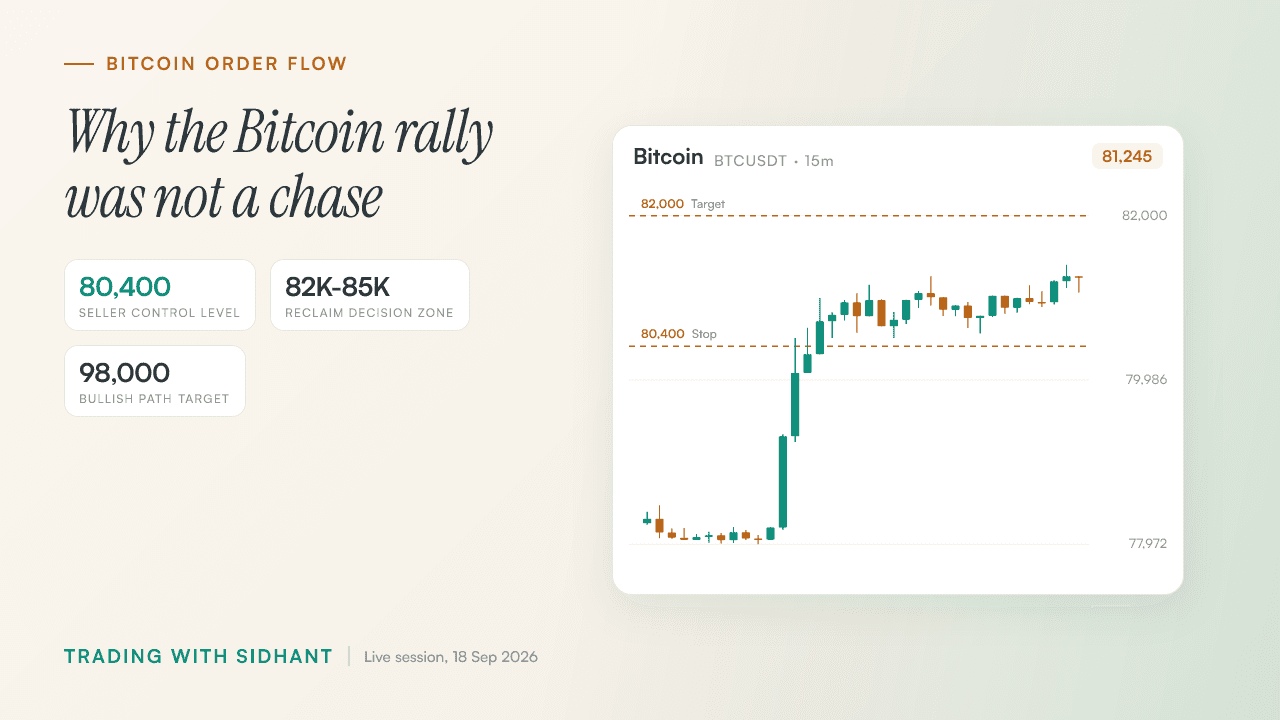
Bitcoin had already rallied, so Fahad used 80,400, delta and seller exhaustion to explain why waiting beat a FOMO entry.
When to Quit a Profitable Intraday Strategy
Rs 12 lakh in profit looked different after Sidhant counted the 1,500 hours and the freedom the strategy had consumed.
Get post alerts in your inbox.
New blog post? We'll email you. No spam, unsubscribe anytime.
Join our Telegram community.
Get post alerts, trading discussions, and market updates.