Master Bitcoin Trading Strategy for Indian Traders 2026
Discover how Indian traders can optimize Bitcoin strategy with A-plus setups.
10 min read

Bitcoin hit resistance at $67,200 during our latest Hitpoint Live session, and that single level told us everything we needed to know about the week ahead. This is the Bitcoin trading strategy for Indian traders that actually matters right now: not chasing momentum, not gambling on Monday opens, but waiting for the market to hand you an A-plus setup. Fahad flagged the liquidity cluster sitting right at that zone and called it early: "Every first trade of every single week needs to be an A-plus setup." With BTC hovering around $64,600 amid softer U.S. inflation data and dollar weakness, the crypto market is giving mixed signals. We watched the levels. We waited. Here's what the team found.
Key Takeaways
- Never enter Bitcoin trades near $67,200 without a confirmed liquidity sweep, patience beats speed in choppy markets.
- Skipping low-quality Monday setups protects your account more than any stop-loss level ever will.
- An A-plus setup demands at least three confluences and a minimum 2:1 reward-to-risk, anything less is a gamble, not a trade.
- Oil's macro signal, especially its link to dollar strength and inflation, can confirm or contradict your Bitcoin read for the week.
- Ethereum near $2,000 requires pattern confirmation on higher timeframes, weekly structure matters more than hourly noise for ETH positioning.
What is the current Bitcoin trading strategy?
Our team's current Bitcoin trading strategy centers on watching liquidity levels and market structure before committing to any position. Fahad has been emphatic about this: at $67,200, there's a significant liquidity cluster that acts as a magnet for price and a trap for traders who chase it without confirmation. The setup isn't about being clever. It's about being patient.
So basically, here's how we broke it down on the stream. BTC was hovering near $65,700 at the time, with the previous week's high sitting as a key reference, and if you push above $67,200 a lot of buyers pile in, which is exactly why that level is dangerous. According to Investtech's technical analysis, resistance around $65,000 and $67,200 remains firm, and a sustained break above $65,000 would be required before institutional demand picks up meaningfully.
Short bias below $67,200, with a target zone around $63,000 and a tight stop at $67,500. That's not a wide stop. That's surgical.
Why does this matter for Indian traders specifically? The cryptocurrency market trends right now are choppy, not trending, and in choppy markets the traders who get hurt are the ones who force trades.
- Entry zone: Around $67,200 for shorts
- Target: $63,000
- Stop: $67,500
- Bias: Short, pending liquidity sweep confirmation
Fahad called out something that stuck with the whole team: a long squeeze setup after a liquidity sweep would be perfect. That's the scenario we were watching, price runs the highs, sweeps the liquidity sitting above, then reverses hard. Classic move. If you want to understand how liquidity levels function as the backbone of this kind of approach, our breakdown of trading Bitcoin liquidity levels goes deep on the mechanics.
Wait, actually, it's too soon to place anything without that sweep confirmation. That's not hesitation, that's discipline.

How do market conditions shape Monday trading?
Our team views Monday as a day for reading the market, not fighting it. Fahad put it plainly during the stream: "Monday is more like a learning day rather than trading." Not laziness, just recognizing that Monday price action is frequently manipulative, low-volume, and prone to false breaks that burn traders who are too eager to start the week.
Honestly, this is one of the most underrated pieces of trading psychology out there. The market on Monday is still "waking up," institutions haven't fully committed their positioning, ETF flows haven't settled, and in the cryptocurrency market trends we're watching right now Monday opens have been especially erratic, price spikes that look like breakouts and then reverse within hours.
What does the team actually do on Mondays?
- Observe the opening range without placing orders
- Map key levels from the previous week (highs, lows, liquidity zones)
- Assess market structure: are we trending or ranging?
- Wait for at least one confirmed directional move before considering any entry
A viewer on the stream mentioned they'd had a rough week, and Fahad's response was blunt: "That's bad bro, that's bad." The fix isn't to trade harder on Monday to recover, it's to trade smarter by recognizing when the market isn't giving you anything clean. Don't worry, we'll figure it out, but the first step is stopping the bleeding by skipping low-quality Monday setups entirely.
(And this is where it gets interesting.) The traders in our community who improved most dramatically were the ones who stopped seeing Monday as a chance to "make back" Friday's losses and started treating it as reconnaissance instead. The week is long. Understanding the importance of confirmation in trading is what separates the patient traders from the ones who blow accounts on Monday morning fakeouts.
Why prioritize A-plus setups in Bitcoin trading?
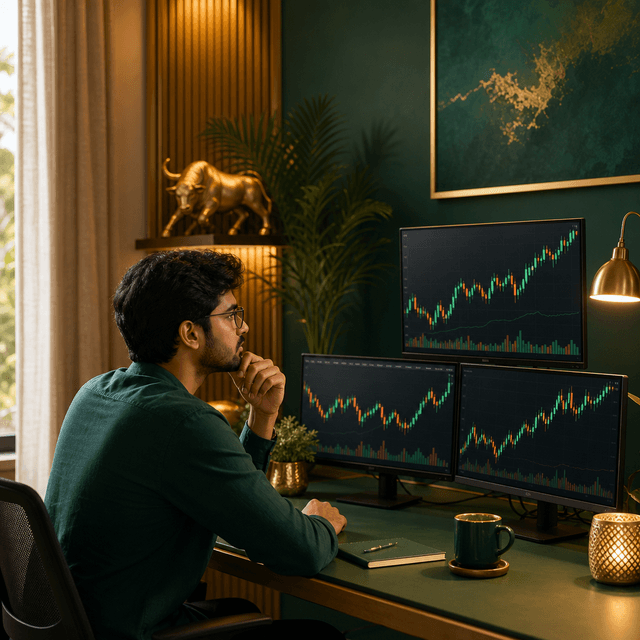
Prioritizing A-plus setups is the single most effective way to protect capital and maximize returns on Bitcoin trades because these setups stack multiple confirmations (liquidity sweeps, clean structure, favorable reward-to-risk) before any position is opened. Fahad's rule is non-negotiable: "Every first trade of every single week needs to be an A-plus setup."
Right? Because here's what happens when you skip that rule: you take a B or C setup on Monday morning because you're excited about the week, it goes against you, and now you're recovering instead of building. The psychological damage from that first loss shapes every decision you make for the next three days.
A-plus setups have specific characteristics and they're not just "looks good to me" trades. They require:
- Confluence: At least two or three technical factors aligning (liquidity sweep + structure break + volume confirmation)
- Clear invalidation: You know exactly where you're wrong before you enter
- Reward-to-risk of at least 2:1, ideally 3:1 or better
- Patience: The setup has to come to you, not the other way around
Quality over quantity, every time. Fahad's price action framework goes into exactly how these setups are identified in real time.
A-plus vs. Standard Trade Setups
| Setup Type | Risk Level | Potential Return |
|---|---|---|
| A-plus Setup | Low to Medium, tight stop, high confluence | 2:1 to 4:1 reward-to-risk |
| Standard Setup | Medium to High, wider stop, fewer confluences | 1:1 to 1.5:1 reward-to-risk |
| Impulse Trade | Very High, emotional entry, no clear plan | Often negative |
Look, the math is simple: take 10 A-plus setups at 3:1 reward-to-risk and win 50% of them, you're up significantly. Take 10 impulse trades and you're grinding just to break even, if you're lucky.
According to Traders Union's Bitcoin price analysis, analysts specifically recommend disciplined position sizing and limited use of margin until BTC sustains a break above $65,000, which is exactly the kind of conditional patience that defines an A-plus mindset. You're not predicting, you're reacting to what the market proves.

What's the importance of oil trading discussions?
Focusing on oil trading discussions helps traders gauge broader market dynamics that ripple across assets, including Bitcoin, and Fahad flagged oil as one of his top interests for the week, saying directly: "I'm really interested in oil this week." Long setups were on the radar pending volume and directional confirmation.
Why does oil matter to a crypto trader? Macro correlation is real, and when energy prices move sharply it signals shifts in inflation expectations, dollar strength, and risk appetite, all of which directly influence cryptocurrency market trends. Oil isn't a sideshow, it's a leading indicator for the broader "risk on / risk off" environment that BTC lives inside.
Here's what the team was tracking:
- Current trend: Anticipating lower oil prices in the near term, but watching for a reversal setup
- Setup requirement: Volume confirmation before entering any long position
- Impact on BTC: Dollar weakness (often tied to softer oil-driven inflation) tends to support crypto prices
- Key watch: Event risk, because oil is sensitive to geopolitical news and inventory data releases
"Base your trading decisions on current volume and market direction," that was Fahad's core teaching point on oil. Not predictions. Not hunches. Volume tells you where the real money is moving.
(And this is where it gets interesting.) The team noticed that oil's anticipated move lower actually aligned with the macro backdrop that pushed BTC toward $64,600, as softer-than-expected U.S. inflation data weakened the dollar. These macro threads connect, and if you miss the oil story you might misread the Bitcoin setup entirely.
Should we go into oil positions blindly? Absolutely not. The entry wasn't specified yet, the team was clear that confirmation was needed first, and that discipline is the same whether you're trading crude or crypto. Our guide to trading gold market conditions covers similar multi-asset macro thinking that applies directly to oil setups.

How does Ethereum's outlook affect trading choices?
Ethereum is viewed as a high-potential asset by our team, with Fahad noting that long-term pattern monitoring is essential for positioning correctly, and the $2,000 level was a key psychological marker on our radar as ETH was heading toward that zone. Price reaction around it mattered before any decisions got made.
Fahad's conviction on Ethereum came through clearly: "If I have to invest in only one or two assets, I would definitely pick Ethereum." Not a casual comment, that's a considered view based on ETF momentum in the cryptocurrency market trends, network fundamentals, and price structure on longer timeframes.
Here's the thing about ETH near $2,000: it's not just a round number, it's a magnet for stops, a level where institutional orders tend to cluster, and historically a zone that has acted as both support and resistance. You know what I mean? The way price approaches that level matters as much as whether it holds.
What this means for trading choices:
- Long-term bias: Bullish on ETH, but patient on entry timing
- Key level: $2,000 as a reference zone for both support and potential reversal
- Pattern focus: Watch weekly and monthly candles, not just hourly noise
- Portfolio view: If allocating between BTC and ETH, the team sees ETH as the higher-upside play at current levels
Looking at some community members' returns on ETH positions from earlier this year? That's crazy, and it validates the longer-timeframe approach we've been teaching. Exploring bearish and bullish Bitcoin trading strategies gives useful context for how team positioning shifts between assets depending on macro conditions.
The Ethereum story isn't separate from the Bitcoin trading strategy for Indian traders, it's part of the same framework. Diversify between the two based on structure, not sentiment.

The week's stream came down to one core message: the market doesn't owe you a trade. Here's what the Hitpoint team took away from everything we covered:
- Liquidity at $67,200 is the line in the sand. BTC's short setup was valid only with a sweep confirmation above that level, stop at $67,500, target $63,000
- Monday is reconnaissance, not trading. Reading structure and mapping levels beats forcing entries on low-volume opens
- A-plus setups only. If the setup doesn't have at least two to three confluences and a 2:1 reward-to-risk minimum, it doesn't get traded. Full stop.
- Oil macro connects to crypto. Dollar weakness and oil trends shaped the broader environment that BTC was trading inside; missing that context means missing the picture
- Ethereum near $2,000 is a long-term watch. The team's conviction is there, but entry timing depends on weekly pattern confirmation, not impatience
The market is madness out there right now, choppy and unpredictable and full of traps for traders chasing momentum. The edge isn't in predicting the next move, it's in being ready for the right one.
Join the Hitpoint community for live market coverage and real-time trade alerts because the best setups don't wait for you to catch up.
Watch the full stream: Master Bitcoin Trading Strategy for Indian Traders 2026 on YouTube
Disclaimer: This article is for educational purposes only and is not investment advice. Crypto assets are unregulated in India, are highly volatile, and can lose value rapidly; there is no established investor-protection or grievance-redressal mechanism for them. Trading With Sidhant LLP is not a SEBI-registered Investment Adviser or Research Analyst, and nothing here constitutes a recommendation to buy or sell any asset. Income from virtual digital assets is taxable in India at 30% plus applicable cess, with 1% TDS on transfers. Past performance is not indicative of future results. Do your own research before trading.
Frequently Asked Questions
- What is an A-plus trade setup?
- An A-plus trade setup is a high-confluence entry that combines at least two to three technical confirmations, such as a liquidity sweep, a structure break, and volume alignment, with a minimum 2:1 reward-to-risk ratio. Fahad's rule is that the first trade of every week must meet this standard. It eliminates impulsive entries and forces traders to wait for the market to come to them rather than chasing price.
- How do liquidity sweeps affect Bitcoin trading?
- Liquidity sweeps occur when price briefly moves beyond a key level, like $67,200, to trigger stop orders clustered there, then reverses sharply. For Bitcoin traders, sweeps signal where the smart money is positioned and often precede strong directional moves. Our team uses sweeps as entry triggers rather than chasing the initial spike, which dramatically improves entry precision and reduces the risk of getting caught in a false breakout.
- Why is Monday considered a learning day for trading?
- Monday markets are typically low-volume, structurally ambiguous, and prone to false moves as institutions settle their weekly positioning. Fahad describes it as reconnaissance time. You map key levels, observe how price reacts to last week's highs and lows, and wait for one confirmed directional move before considering any entry. Traders who force Monday trades to recover from the previous week's losses tend to compound those losses rather than fix them.
- What are the current strategies for trading oil?
- The team's oil strategy centers on volume confirmation before entering any position. Fahad flagged oil as a key watch for the week, anticipating potential lower prices but holding off on entries until the market direction confirmed through actual volume, not prediction. Oil also serves as a macro indicator: its relationship with dollar strength and inflation expectations directly influences Bitcoin's risk environment, making it worth tracking even for pure crypto traders.
- How does Ethereum's outlook impact trading decisions?
- Ethereum's approach toward the $2,000 level creates a significant decision point for traders. The team's long-term bias on ETH is bullish. Fahad has stated he would pick Ethereum among his top one or two assets, but entry timing depends on weekly and monthly pattern confirmation rather than short-term price action. ETH near $2,000 functions as both a psychological magnet and a structural reference zone, making it a level to monitor closely rather than trade impulsively.
Share this post

How to Use Direction Area Trigger in Nifty Trading
A Nifty short near 24,000 needed more than a pin bar: daily bias, a defined area and footprint evidence had to agree.
Bitcoin Order Flow Analysis After a Rally
Bitcoin had already rallied, so Fahad used 80,400, delta and seller exhaustion to explain why waiting beat a FOMO entry.

When to Quit a Profitable Intraday Strategy
Rs 12 lakh in profit looked different after Sidhant counted the 1,500 hours and the freedom the strategy had consumed.
Get post alerts in your inbox.
New blog post? We'll email you. No spam, unsubscribe anytime.
Join our Telegram community.
Get post alerts, trading discussions, and market updates.